Community braces for impact as nuclear repository project looms over Grassy Narrows First Nation
Posted March 22, 2026 5:47 pm.
Last Updated March 24, 2026 10:08 am.
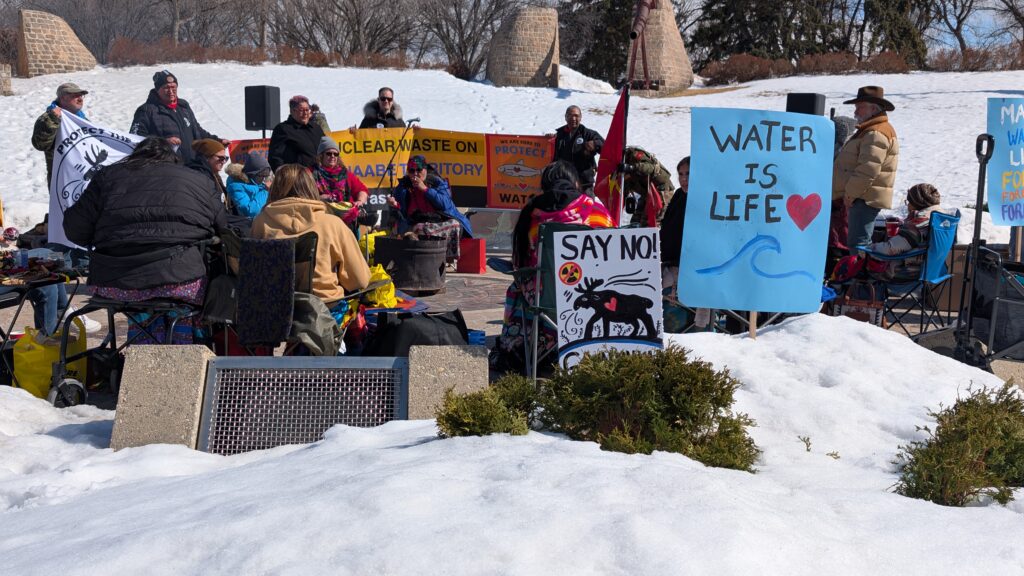
Winnipeggers marked World Water Day by coming together at The Forks for a rally to say no to nuclear waste on Indigenous land and show support to the Grassy Narrows First Nation.
“The nuclear waste industry wants to build a deep repository to store all of the nation’s nuclear waste underground,” said Anne Lindsey, an advocate with the Manitoba Energy Justice Coalition.
Members of First Nations in the Lake Winnipeg watershed and environmental groups are protesting against planned nuclear waste storage near Ignace, Ontario.
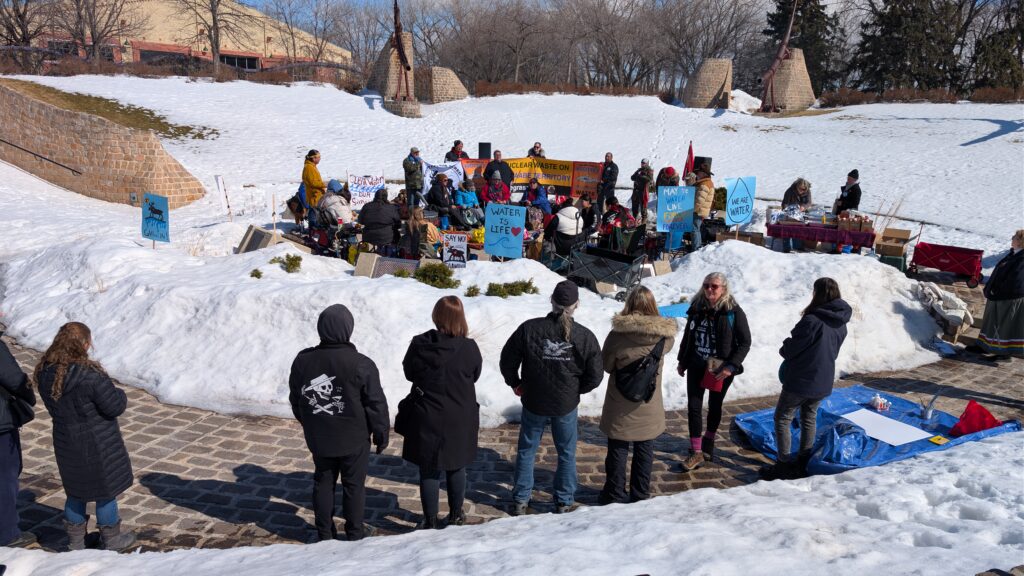
The planned geological repository for nuclear waste lies on the watersheds of the Rainy River, which flows into Lake of the Woods and then into the Winnipeg River and Lake Winnipeg.
“The big concern is that the water could indeed become contaminated with nuclear materials,” said Lindsey.
Grassy Narrows continues to face multiple other industrial threats to its water supply in its territory, including pulp mill effluent and expanding mining activity in the region.
“It is very sickening, because we are still dealing with mercury poisoning,” said Chrissy Isaacs, a community member of Grassy Narrows First Nation.
Isaacs says that they are still dealing with the outcomes of mercury poisoning from 50 years ago, and the new facility proposal has residents frustrated.
“Everybody needs to speak up for the water, because water is very precious and sacred. It affects everybody, not just in our community,” said Isaacs.

Lindsey adds, “This material lasts, and it’s toxic and radioactive for hundreds of thousands of years. We have never built any technology that we can guarantee can last that long.”
Nuclear power advocates present at the rally say that the nuclear waste on its own can be a source of energy when used in a specific types of reactors. Todd de Ryck says it will help to reduce the use of fossil fuels.
“They are going to process it and put it back into the nuclear reactors. Out of 100 tons of waste, two tons are waste, and the 98 go into reactors. And it can help us to displace fossil fuel production,” said de Ryck.
The proposal for the nuclear waste facility came in last year, and though it will take years to build due to the time-consuming building process, community members say, the action has to be taken now.
“I come from a community where we know how sacred water is,” said Isaacs.