Residential school survivors join Manitoba premier to honour children at school burial site in Brandon
Posted September 30, 2026 12:16 pm.
Last Updated September 30, 2026 5:50 pm.
Manitoba Premier Wab Kinew stood on the former site of the Brandon residential school Wednesday as he talked about the importance of keeping the stories of students alive.
On a grassy hill dotted with orange hearts, he spoke about an eight-year-old boy who repeatedly ran away from the school, and of the many who never made it out, their deaths recorded on church records and in newspaper articles.
A nearby burial site for the students shows how those stories risk getting lost, said Kinew.
“When we say we have to preserve this memory so it could never be denied, we have living proof right here,” he said.
“There are children buried down the hill. And yet there was a zip line there until earlier this week. There’s hydro and water lines put into that ground where the children were buried. They dug up part of that area and built a pool.
“And I’m not saying that to judge anybody or to make anyone feel any kind of way, I’m just telling you this is what happens when memory is not preserved.”
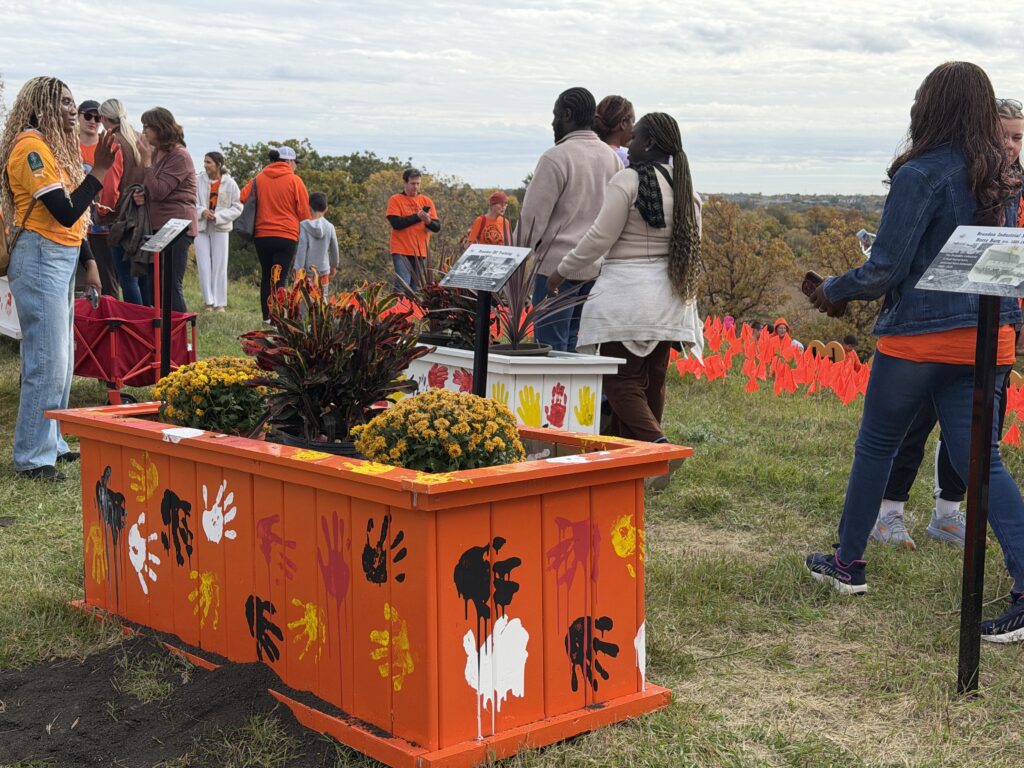
The site was part of a private campground for more than two decades until the province and City of Brandon announced Tuesday they had partnered to buy it.
Kinew said any decisions regarding the site will be done in consultation with residential school survivors, impacted First Nations and advocacy groups.
“We worked together to buy that land, and now we’re giving it to the stewardship of Sioux Valley, so that’ll be protected in the future,” said Kinew.
“It’s really, really important that we do so, because the story of this land down the hill here is a story of how memory can be lost.”
Earlier in the day, Kinew sat with First Nations leaders and elders in a teepee erected at the Turtle Crossing Campground to mark the handover.
Sioux Valley Dakota Nation Chief Jennifer Bone, who participated in the ceremony, said having access to the site is significant. “I think it’s a huge step in reconciliation,” she said.
“We spent so many years advocating to protect that site.”
Sioux Valley elder Oswald McKay prayed at the ceremony and said it’s important to find out what happened at the site to find some closure.
He said he prayed for all those still suffering the effects of residential schools.
“My prayers are for healing,” he said.
“We suffer by it. Intergenerational suffering is still going on. You still see it in the communities. You still see the young people, in the cities, you know, and that is the direct result of taking language and culture away.”
The Sioux Valley Dakota Nation says more than 50 children are buried at the site.
A black, metal gate reading Brandon Residential School Cemetery sections off an area believed to be the burial ground, and a sign says work continues to learn more about the site and the children buried there.
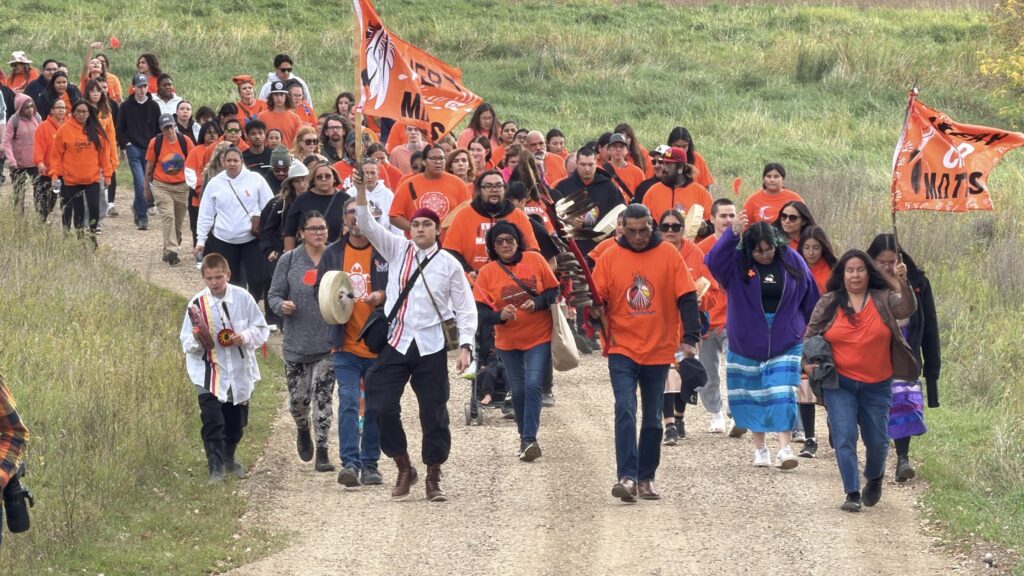
The day honoured not only those lost but all who attended the school.
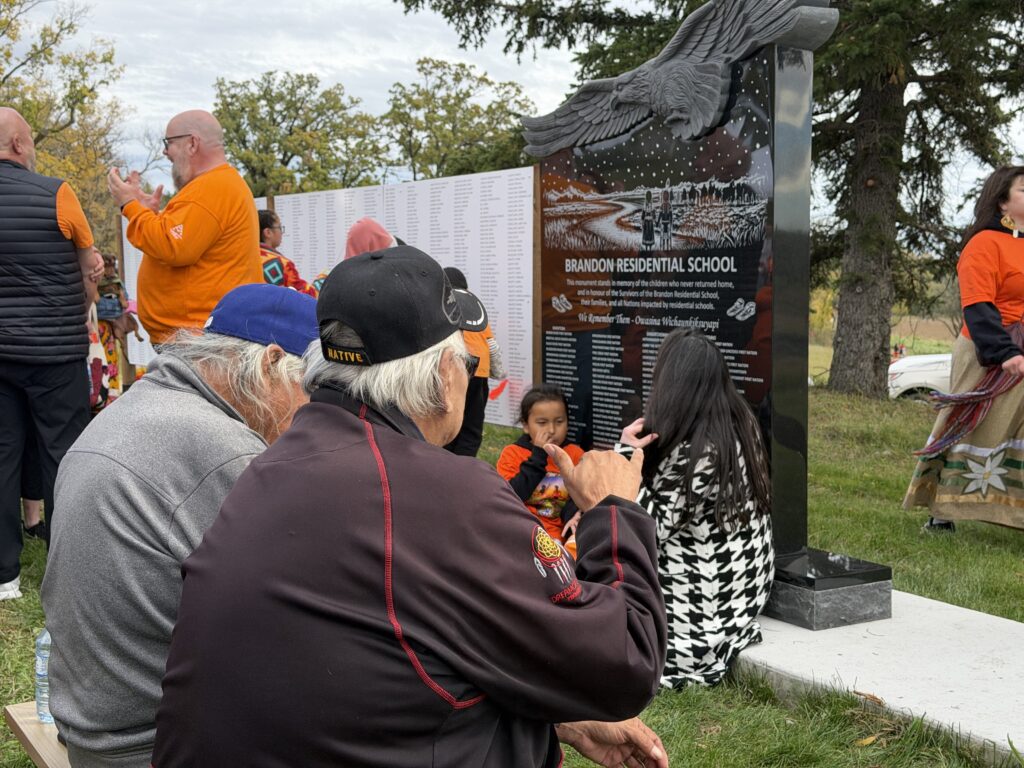
A large stone monument topped by an eagle was unveiled as a memorial. Bone said it lists all the students who attended the school as a way to commemorate what they went through.
Jessie Chaske, a residential school survivor who was sent to a Saskatchewan school, was part of the group who designed the monument.
“I went through hard experiences, you know, so there’s a lot to try and forget,” she said.
“But you don’t usually forget.”
She said it’s always sad to think about the children who never made it home and of what parents and grandparents went through.
Many families still come to the site to remember, she said, and the monument is a way to help support them.
“We like to provide a nice place for them to come and visit, maybe spend a few hours here, to know that we didn’t forget them.”
Crystal Buffalo, from the Whitecap Dakota Nation, came to Brandon because her grandfather was taken at the age of five.
Buffalo, a residential school survivor herself, brought her grandson along to honour her grandfather
“It’s the first time we are here and it’s very emotional,” Buffalo said. “It’s powerful. It’s moving to know that he was here as a little boy.
“It happened. The atrocities, the abuse. But we are still here.
“We are the seeds they could not destroy.”
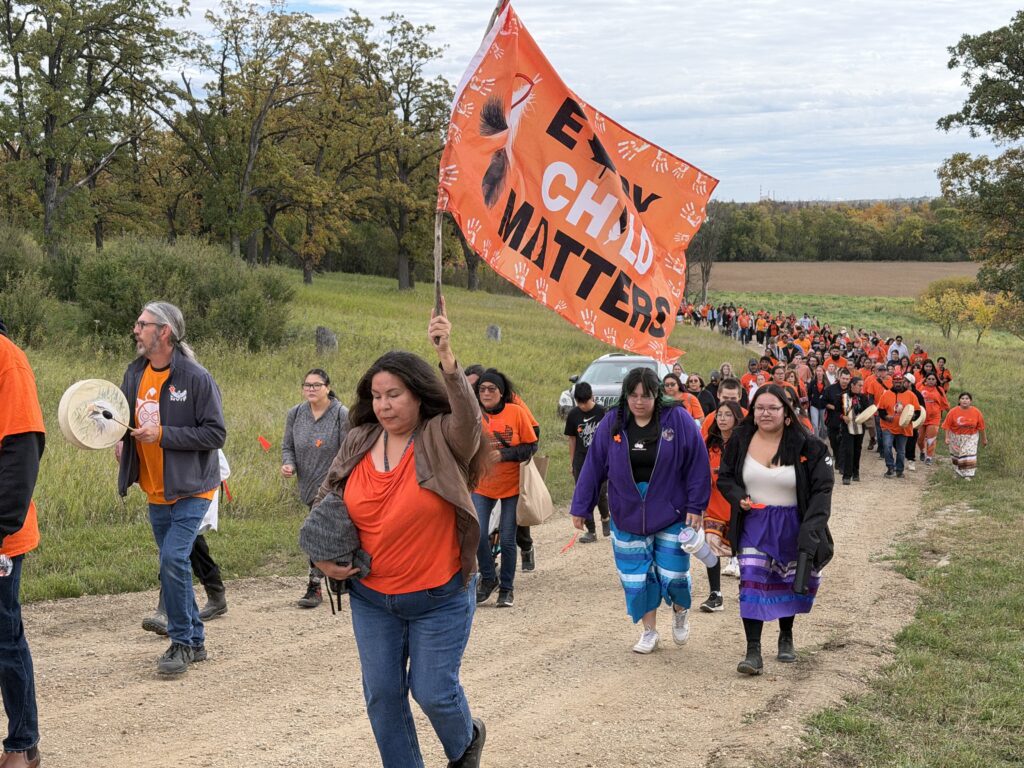
Eleanor Elk, who was taken to a residential school when she was six, says even though many years have passed, it is still challenging to be at the residential school site.
“I have a lot of mixed emotions. Mostly sad memories,” said Elk, who comes to the Brandon residential school site every year.
She was there Wednesday to support other survivors on that day of honour and commemoration.
“I survived through it,” she said. “We are resilient. We’ve come so far to able to share what we’ve been through.”
Percy Tacan attended the memorial with his brother.
Tacan, in his 80s, says he still finds strength to speak about his residential school experience with his children
“But when I hear about residential schools, I just sit quiet and all sorts of emotions come up,” he said.
Cy Standing was sent to the residential school when his mother passed away. He was just six at the time. His brother and sister were sent there too
Standing says he ran off from the school five times.
“The food was bad. It was always burned,” Standing said.