Residential school survivors mark 50th anniversary of school closure in Portage la Prairie
Posted October 9, 2025 5:54 pm.
Last Updated October 9, 2025 6:47 pm.
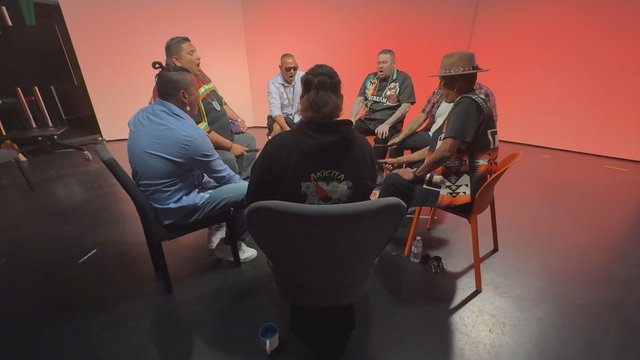
Residential school survivors, their families and the community came together on Thursday to mark the 50th anniversary of the closure of a residential school in Portage la Prairie.
“We’re strong, resilient people. And we’re all proof of that. All of us,” said Chief Gilbert Andrews, of God’s Lake First Nation. Gilbert attended the school from 1972 until 1975.
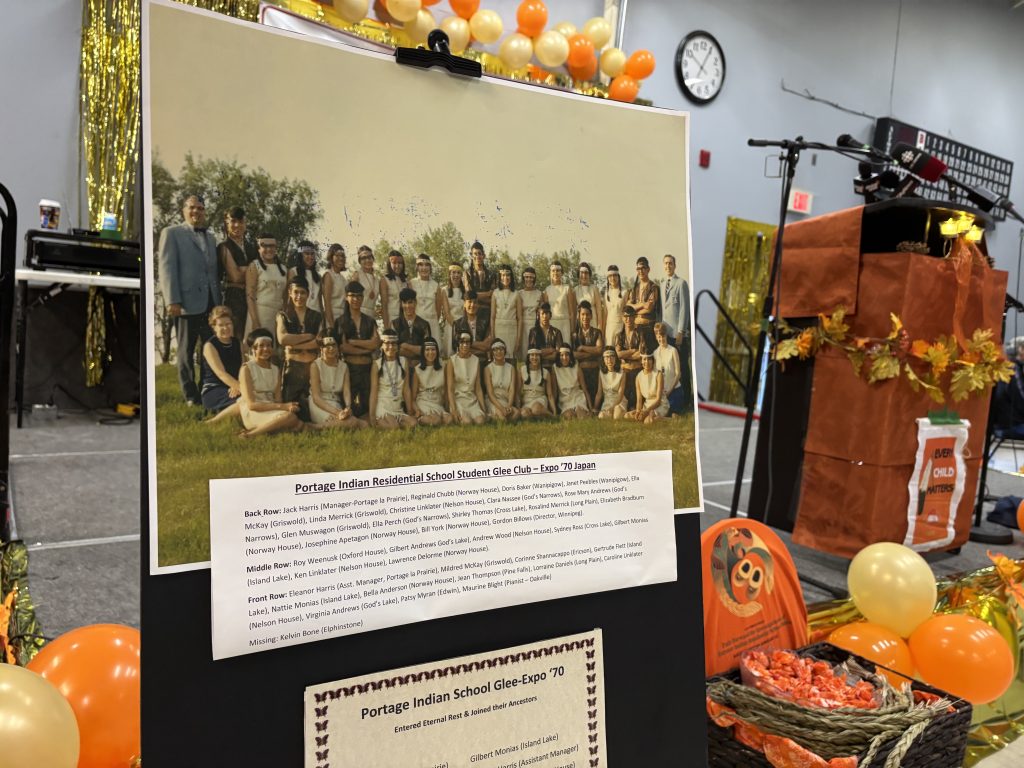
It was an emotional day, full of reunion, tough memories and celebration of resilience, best illustrated by a performance by the school’s former glee club.
Another moment of healing included two birthday cakes and a traditional song for survivors, who say they weren’t allowed to celebrate birthdays in residential schools.
Absent from the voices that were there were those who didn’t make it out. Bernadette Hart was one remembered and commemorated by those in attendance and a plaque that will soon hang in the former residential school turned museum.
“Little did we know that she had passed away on January 8, 1974. She was only 15-years-old,” said Beverly Hart, Bernadette’s sister.
A former student says she almost missed out on the day of reflection, due to the very lessons she learned in the school, where she says they were not allowed to show emotion.
“I was scared to come because I didn’t want them to see my emotions or my pain, which is an odd thing to say, but that’s how a lot of us feel,” explained Jennifer Wood, a former student at Portage la Prairie residential school.
Wood and others are glad the school was preserved and is being used to educate others. She delivered a message of hope and resilience at the event, acknowledging how things have changed in the past 50 years.
“I see that non-native people are starting to walk with us, and talk with us and support us,” said Wood.
While she’s encouraged by the progress of the last 50 years, she and others say there’s still more to be done as they try to break the cycle of generational trauma.
“I see a lot of abuse happening. There was no supports for the survivors. And alcoholism was a big factor in their coping mechanism. Like myself, growing up, I never heard the word ‘I love you’ in my household because my parents were not taught to show compassion and empathy. To show love. Nowadays, I tell my children I love them on a daily basis,” said Clyde Okema, the son of a residential school survivor.