A Filipino heart in Canada: Remembering and reclaiming identity
Posted July 25, 2025 7:35 am.
Last Updated July 25, 2025 7:41 am.
The journey continues for CityNews reporter Joanne Roberts in her quest to reconnect with her Filipino roots.
The exploration of identity has provided insight into a part of Winnipeg known as the “birthplace of the Filipino community.”
It’s also allowed for deep conversations about internalised racism and the legacy of colonisation.
Now, the focus shifts to the people who have previously walked the long road of remembering and reclaiming: Canada’s Indigenous, First Nations, Métis and Inuit people.
Enter Kristen McKay, a 2Spirit artist and dancer from Pine Creek First Nation to help lead the way.
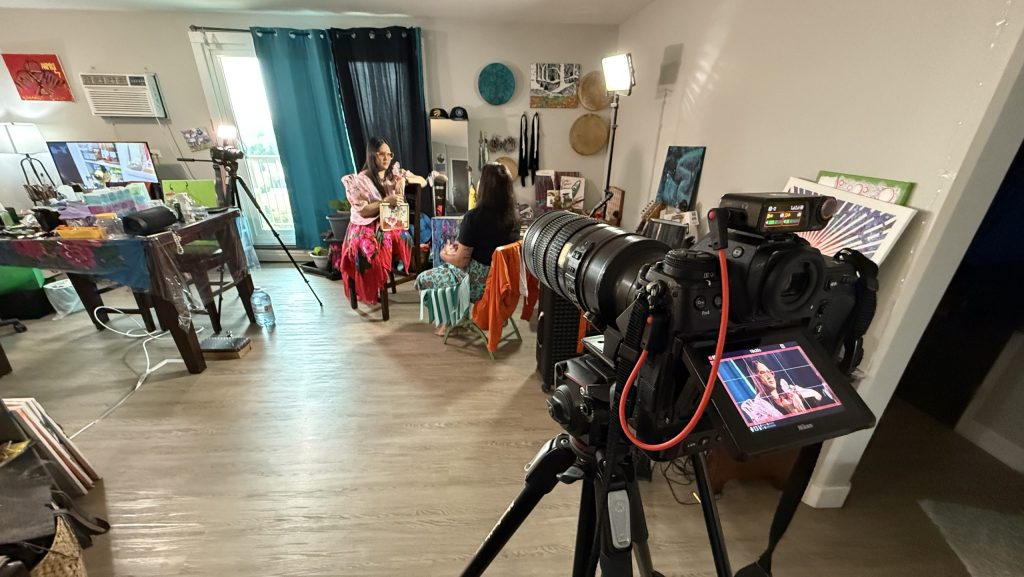
Joanne: We’ve known each other for a little bit all through work. I remember I contacted you for an interview, and then you just shared such beautiful things with me. You played your guitar, we went to The Forks and had a nice conversation, and we just sort of kept in contact the entire time. And for people who watched my last special, you were featured at the Manito Ahbee pow wow, which was really cool to follow you. How has it been since then?
Kristen: it’s been beautiful. It’s just life now.
Joanne: During this special, I’ve been thinking a lot about history and legacy and, just sort of what it means for me to be Filipino Canadian here. And of course, when you think about Canada and being Canadian, my mind automatically goes to the stewards of this land, the Indigenous, First Nations, Métis people, Inuit people. And so that’s why I really wanted to talk to you. I know that you and I have shared personal conversations about hardships and difficulties that everybody goes through. And what I really love about you is that you’re so focused on healing. And I don’t mean surface level healing.
Maintaining a good energy despite the hardships that are gonna come regardless. And so I wanted to talk about, the hardships and connecting with culture, which, you know, I know that you are very familiar with also. So in terms of reclaiming your identity, what was that journey like?
Kristen: Well, it was like a beautiful passage way, but it was very difficult. I moved to Winnipeg when I was 18. I come from a smaller community that I had lived in for about 10 years of my life. So my childhood and then teen years were there.
But I had to leave that community to come to like a major city to find culture. So the things I have integrated into my life, some of them, they belong to our Anishinaabe people. Some of them are practices from other distinction groups and other Elders that have shared things in passing.
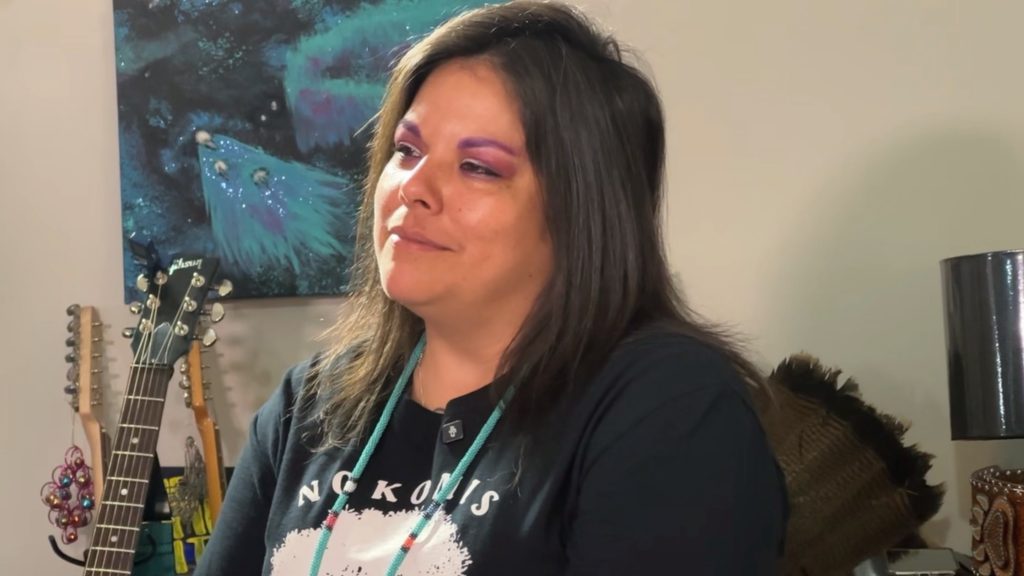
Joanne: So it’s really interesting that you say you have to know where you’ve come from. So actually earlier this year, all of a sudden I was like, my story doesn’t necessarily start with me. Like, I have all of my childhood memories, all the hardships, all the joys.
But then I realized just how important it was to think about my parents and their immigration journeys here. What happened in the Philippines and their lives here? How far back do I go? And I started thinking about my grandma and my grandpa and, you know, ancestors in my family line that I haven’t even met.
And suddenly I was just thinking about what it would have been like growing up in the Philippines at that time, making the decision, like both my dad and my mom’s families, to bring their families here to Winnipeg. It’s sort of like this is lasting, like familial legacy. And suddenly it just it made sense.
Growing up in a pretty turbulent family, and how my parents showed love was to make sure I stayed in line because, if I protect you in that way, then then you’ll be safe. But of course growing up with different expectations as a Canadian, there was a lot of culture clash there.
And I imagine that being here in the in the ‘80s, ‘90s, it probably wasn’t the easiest, just like it wasn’t the easiest for a lot of Indigenous in First Nations communities navigating through Canada. Was there a moment like that for you as you were growing up, too?
Kristen: Absolutely. I think they’ve come later in my life. So at this point, I’ve had a lot of realizations about things my parents have gone through.
And the result of those things, especially when it comes to both of my parents being the Indian residential school survivors and then the day school survivors, too. So those impacts, they left imprints on my parents that then became imprints on me.
My parents’ traumas are not mine to carry, but it’s up to me to heal those things within me so I don’t pass them on to the next generation. So for me, that realization of those hardships, even in food sovereignty and what they may have experienced in their life, I went through things with bringing wellness and form of food to my everyday life and having those questions like, am I worthy to eat this way? Am I deserving to take care of myself this way?
But it allowed me to feel more closer to them, that I understood what sort of things they may have gone through when they don’t speak about them. So I don’t know what the details of what their traumas are. I just knew that I had carried a lot of them for a long time, but learned to put them down so I can deal with my own traumas, because of course, we all have our own traumas.
But I mean, for me, I’m here to do my life’s work, my heart work, my journey – to not only heal myself, but to heal my parents and my grandparents and their grandparents and their grandparents, or I’m the one they prayed for a thousand years ago.
Joanne: It’s really comforting to know that we’re not just talking Filipino to Filipino. We’re crossing cultures here.
And it’s also just nice to not feel like I’m by myself. What’s really resonating is that you don’t know your family story. I don’t know mine either. My mom won’t talk about it, my dad has been gone for some time now and honestly, I don’t think I’m ever going to know.
So my question is, how do you deal with that disconnect and still manage to push forward and healing not just you, but your family?
Kristen: We go inward. We look at our own mind or our own body in our own spirit. And we connect all those things together. Like the sweetgrass braid, all those things are all braided together and they stay together.
They never come apart. That mind, body and spirit are always one, all the time. So once you have that work that you’ve been doing inward, then you can turn upward and turn to your ancestors because they long and they wait for us. They wait for us to be well so they can help us, so they can guide us so they can lead us to what ways that used to be or what ways that there were, and also helping us find a new paths for us to be living our best and our happiest lives.
I think about those 10,000 grandmothers that I have. That’s how I got to that next level, because the actual human beings that were here were unable to connect to me. They were unable to lead me to the ceremonies. So for me, when I turned inward and then I was connected to all these things, I was taking care of my mind, making sure I was always thinking positive despite what negativities my family have had.
Learning to care for my vessel in food and water and doing those things to nourish my soul, my spirit. It really helped me feel that support from the ones that have gone ahead. Because they’re the ones that started this lineage, they started these roads, where the branches that are continuing those right now.
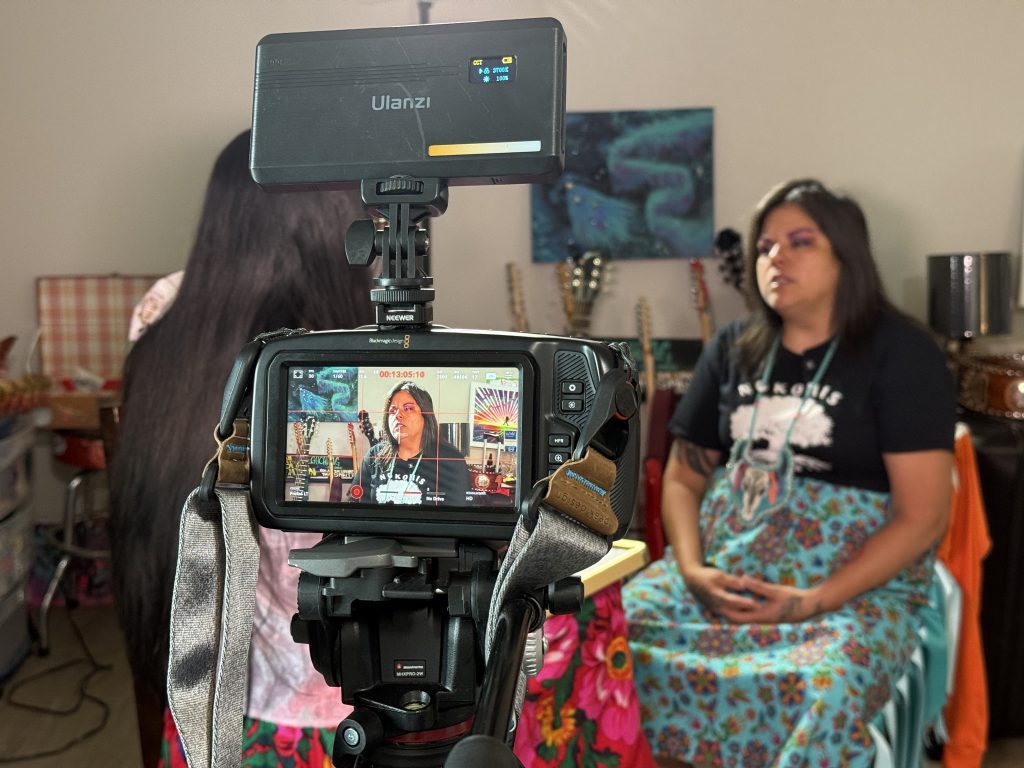
Joanne: When we talk about reclaiming. It also implies that there is loss. But what I never actually had was just like my family, like, sitting down for dinner. So I remember birthdays growing up. And they were like, what do you want? I was like, let’s just make Filipino spaghetti and let’s sit and just have dinner. But, you know, inevitably life always called.
They would have to go to work. So I never actually got that, like personal family feast. And life has gone on. And I don’t think that that’s in the cards for me.
Kristen: What was shared with me in ceremony was that to understand, you know, that grief and that loss, you know that that stays within us, those members of our family, that they journey and or they go ahead of us.
They live in our mind and they live in our hearts, right? Because we have memories of them. So we could visit them here anytime we want. We have love for them here. We know that love. We can visit that anytime we want. So they ask us these thoughts, but what they’re really asking faced you because you’re still the vessel.
You’re still a human. You’re still here. So that honouring that we give to them, that’s their gift to us. So we still practice that. We still know that.
My ancestors are there to show up for me. And they show up in spirit. They show up in prayer. They show up in those times of need, and I can feel them. There’s things that they say, you can’t see it, but you can feel it. So sometimes I’ll get like goosebumps.
There’s another part where sometimes I feel emotional and I can’t speak. I feel like I’m like choked up. And they say that’s when they all surround you right before your emotions, emerge. It’s your ancestors that are all around you. And each of them, they all have a hand in on you, over you.
So when that emotion for you to cry and to express that and release that feeling you get in your throat, we were told in a ceremony, talk about it. Let it out because you’re protected, you’re divinely guided by your ancestors. And when you feel that feeling like you can’t speak, or can’t swallow, they’re there.
So for me, that feeling comes often. And I just embrace the moment and I breathe through it because that’s all I can really do. I can’t speak and I’m usually in high in emotions, but I also feel so grateful to have that connection with them. I feel so grateful that even though I can’t see them, I can feel them.
WATCH: CityNews Connect: A Filipino Heart in Canada
Joanne: So this entire, sort of journey for me has been to, find some new form of identity, of name. I know that in a lot of different cultures, including yours, names are not just given to a person. There’s a lot of meaning behind it. Can you tell me just about, what names and spirit names really mean to you?
Kristen: Well, they shared this with me in a ceremony that our grandparents and our families, they often gift us our first spirit names.
So when you’re in a family, Indigenous, there’s always those nicknames. And that’s what it really is. It’s your first official spirit name, but it comes from your families. So my grandparents gifted me the nickname Kitche Ikwe which means, grand woman, like big woman, great woman. So when my grandparents gifted me that name, it took me into my adult life to understand who Kitche Ikwe was.
Joanne: Is there any sort of name or something that has come into mind? Just sort of, as you and I have been talking about this.
Kristen: I did say some prayers and I did ask spirit, and not long after, like a dragonfly came. So that dragonfly in our like culture, it represents our ancestors. So that message that comes from creator, it’s delivered by the dragonfly, you know, and it was more of an identity to your work.
And what you do, that message that you share, those stories you get to tell, you know, you go right to your community to share that. So that was what came to me when you asked me.
Joanne: I love you so much, thank you for doing this.