Winnipeg 2Spirit dancer rejects duality of genders sometimes imposed by powwows: ‘I’ll dance in both’
Posted April 4, 2025 2:31 pm.
Last Updated April 4, 2025 7:04 pm.
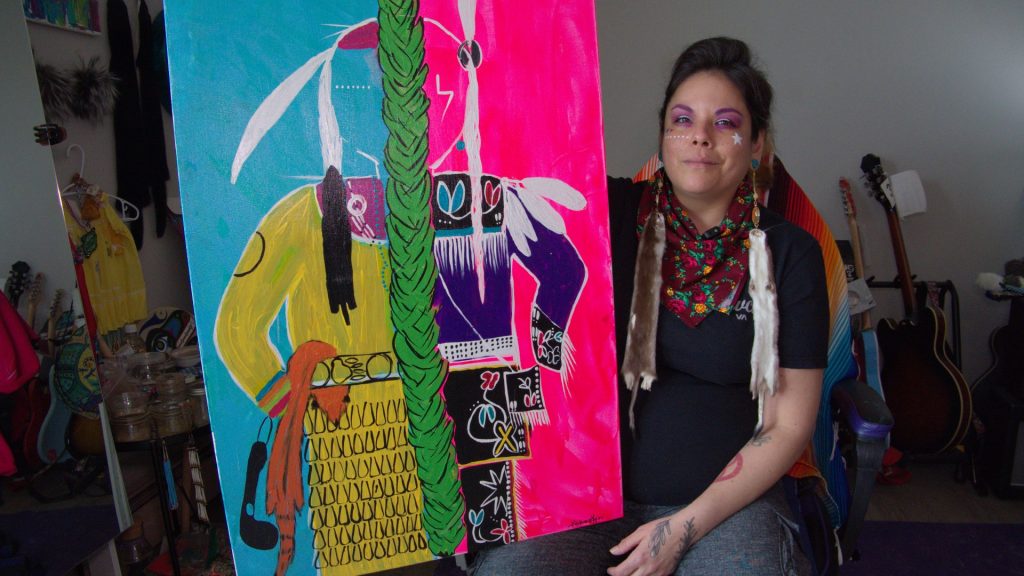
Kristen McKay’s painting says it all.
The left half features an Indigenous woman’s powwow regalia: clothing with a simple design and restrained colour palette. A beaded necklace; rows of bells, ermine fur tucked into the belt.
The right half is a man’s regalia: the clothing is deeper-coloured and more vividly patterned. There are fringes on the pant leg and wrist cuff; feathers in the hair and off the shoulder, a matching satchel, all against a neon pink backdrop.
It’s McKay’s visual representation of being 2Spirit – how she identifies, what she feels, and who she is – with both halves forming one whole.
“So in this painting, I painted the woman that I dance as,” said McKay. “But I also painted the man that I’ll eventually dance as, as well.
“I enter the (powwow) circle as both equally. But right now, I’m wearing my jingle dress as the identity piece. One day there’s gonna’ come a day where I wear this male regalia and it’s gonna be the medicine that brings both of these spirits together.”
The umbrella term “2Spirit” describes an Indigenous person with both feminine and masculine spirits within themselves. It’s considered an important spiritual identity – more than just a sexual one.
McKay, who is Anishinaabe, describes being 2Spirit as the “duality of things.”
“It’s the day, it’s the night. It’s white, it’s black. It’s men, it’s women.”
That more spiritual understanding of gender can prove tricky in a world largely defined by duality.
McKay says binary genders were not always part of her Anishinaabe culture.
“When we’d gather there hundreds of years ago, we gathered there in the ways that we felt best in.
“There would be the support of our women being more masculine in the ways that they walked, and our men being more feminine in the ways that they walked.”
McKay says the non-Indigenous world’s fixation with limiting the things to duality seeped into Indigenous thinking because of residential schools.
“So it was the girls are over here and the boys are here,” she explained. “And I think that, that itself was integrated into our peoples. So a lot of our people were divided by gender at that point.”
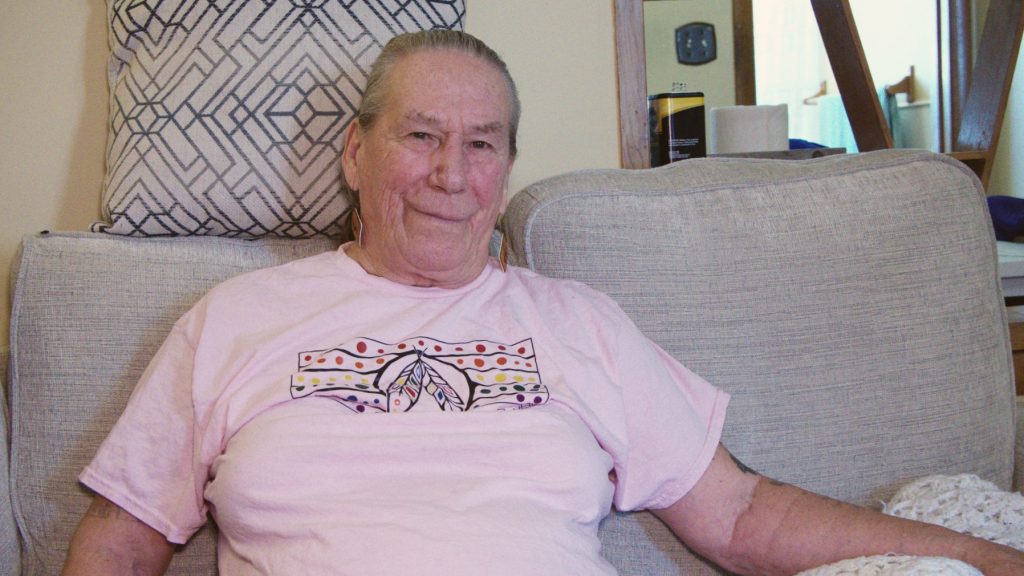
“We were pushed underground for many, many years. And then our people started coming back out, about 40, 50 years ago. We didn’t have the title 2Spirit at that time,” said Charlotte Nolin.
Nolin, an elder and knowledge keeper in Winnipeg who identifies as 2Spirit, said although the term was coined in 1990, 2Spirit people have always been in existence.
“In our Ininew or Cree traditions, we don’t refer to ourselves as 2Spirit but rather those that walk in between the worlds — male and female aspects of creation. Not just humanity, but creation,” she said.
Nolin, 74, said she’s not sure why conversations about including 2Spirit people in powwows have begun. She simply hopes their spaces are protected.
“We’ve always been part of the whole powwow scene and will continue to be part of that,” said Nolin. “We just want equality. Allow us to be. Allow us to share our gifts with you.”
It’s something McKay is keenly aware of every year as the powwow season gets underway in Manitoba. Not all powwows have a 2Spirit category, while others are dedicated entirely to 2Spirit people.
But McKay says she’s not letting gender define her, and she’ll dance at every powwow she can.
“There’ll be powwows where I’ll bring both of these regalias too, and I’ll dance in both specials in it,” she said.
“I’m included there regardless if they have a special for 2Spirit or not.
“Our 2Spirit people, we’re medicine people. We’re helpers. We’re very sacred beings, so we need to be in that circle because it’s shared with me from our 2Spirit Kookum, in that circle that’s where we shine the brightest,” said McKay. “In that circle is where we get to be who we are. Unapologetically in that way where we’re there to shine.”