Manitoba floods: Rising Assiniboine River looks to have peaked, City of Brandon says
Posted July 13, 2026 12:50 pm.
Last Updated July 13, 2026 7:22 pm.
A city in western Manitoba says the rising Assiniboine River looks to have reached a peak overnight.
The City of Brandon said Monday that water levels show the river is stabilizing after climbing about 2.3 metres in less than a week.
Mayor Jeff Fawcett warned though that the river is expected to stay high for days and that weather could quickly change the picture.
“If we receive significant rainfall locally or within the Shellmouth or Assiniboine basins, the flood forecast could change again.”
He told a press briefing that early notification of the rising water allowed the city to properly prepare and reinforce weak points.
“We’ve been very very fortunate that the hydrological forecast has been very accurate. The weather worked really well with us so *sighs* continuing to monitor things like crazy, it is going to be sitting at this level for a little while, a few days. Then a very slow receding of the river,” said Fawcett.
The city has spent the last week adding to the dike system as well as installing large sand bags and pumps and doing other prep work.
The river level was at 360.4 metres as of Monday morning. That’s about 2.6 metres higher than last year’s peak, and about a metre lower than the 2014 flood.
Mayor Fawcett says while their efforts are far from over, they’ve learned a lot from previous floods in 2011 and 2017.
“Really, our work began in about 2011. And getting our dike system in place. Re-doing with provincial health the lift stations, and all the other issues we’ve had. So there’s been a lot of adapting to where we are and the way the weather has changed,” said Fawcett.
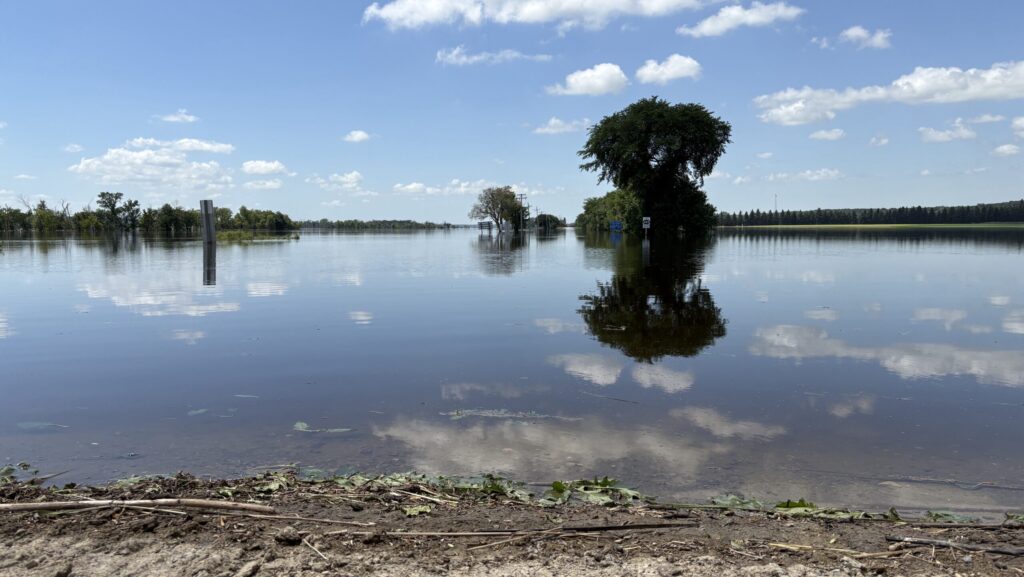
“So, right now, I’m standing on a temporary dike in the middle of Grand Valley Road and as you can see behind me, parts of the road are completely submerged under water. You’ve got street, telephone poles, trees. And just off in the distance you can see where this part of the flooding ends.”
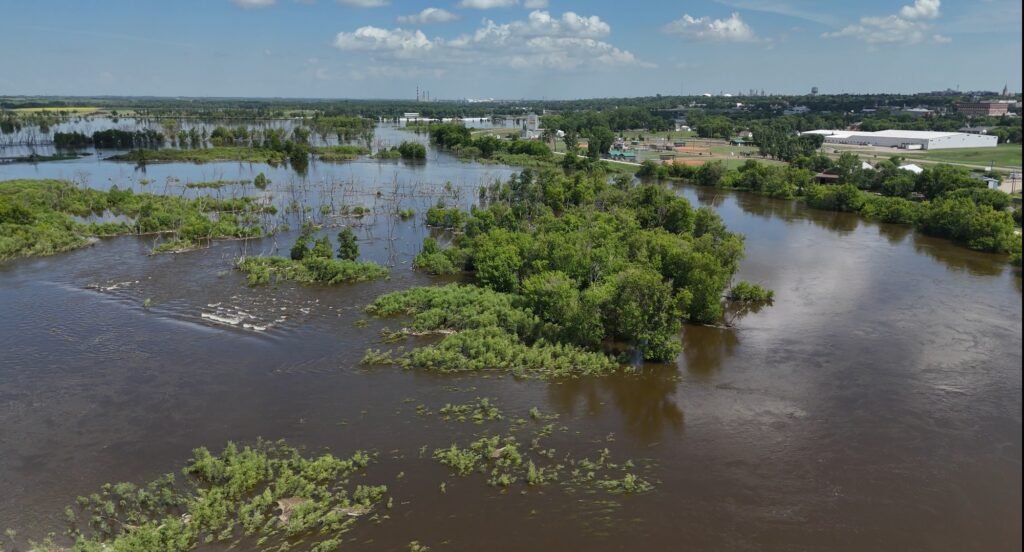
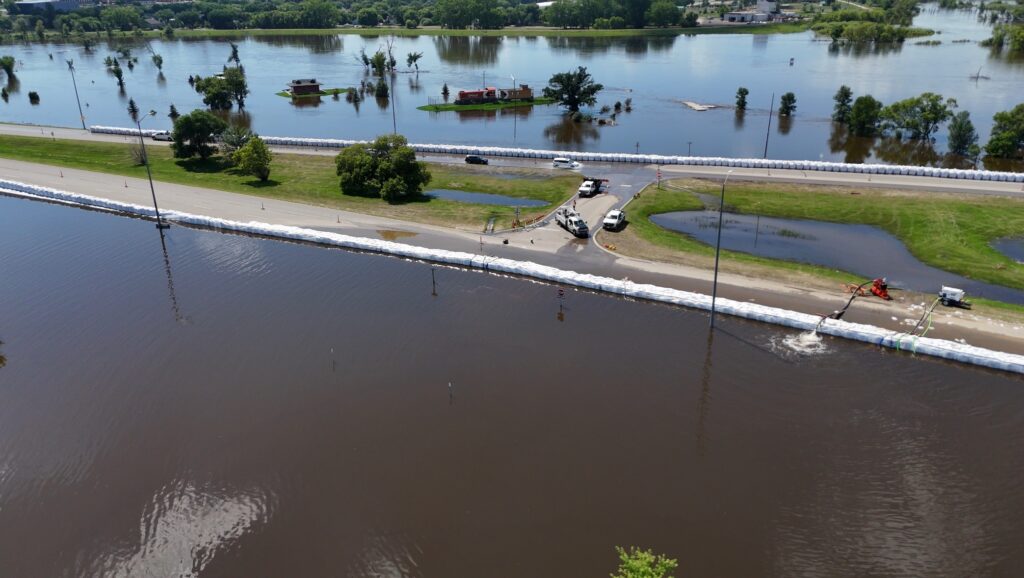
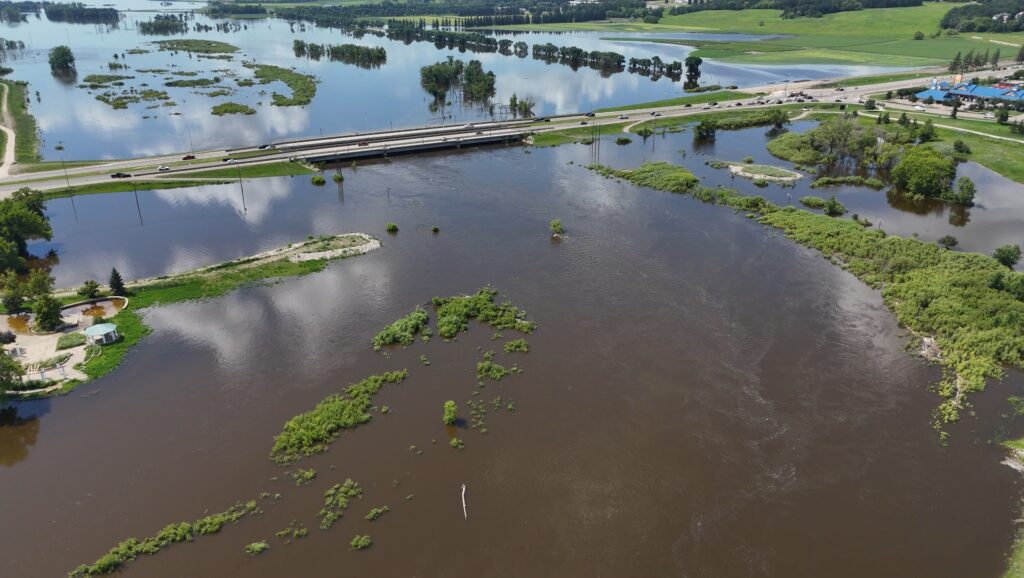
The rising river came after extensive rain left several communities flooded in Manitoba’s Parkland Region.
Water has receded in hard-hit communities, including Swan River, but cleanup and rebuilding efforts are still underway.
In Dauphin, the city’s main hospital and emergency room was knocked out by flooding. Manitoba Premier Wab Kinew said Friday that he was told it would be nine to 12 months before it reopens.
He said he’s pushing to have it open sooner. He also announced a series of financial supports for flood victims.
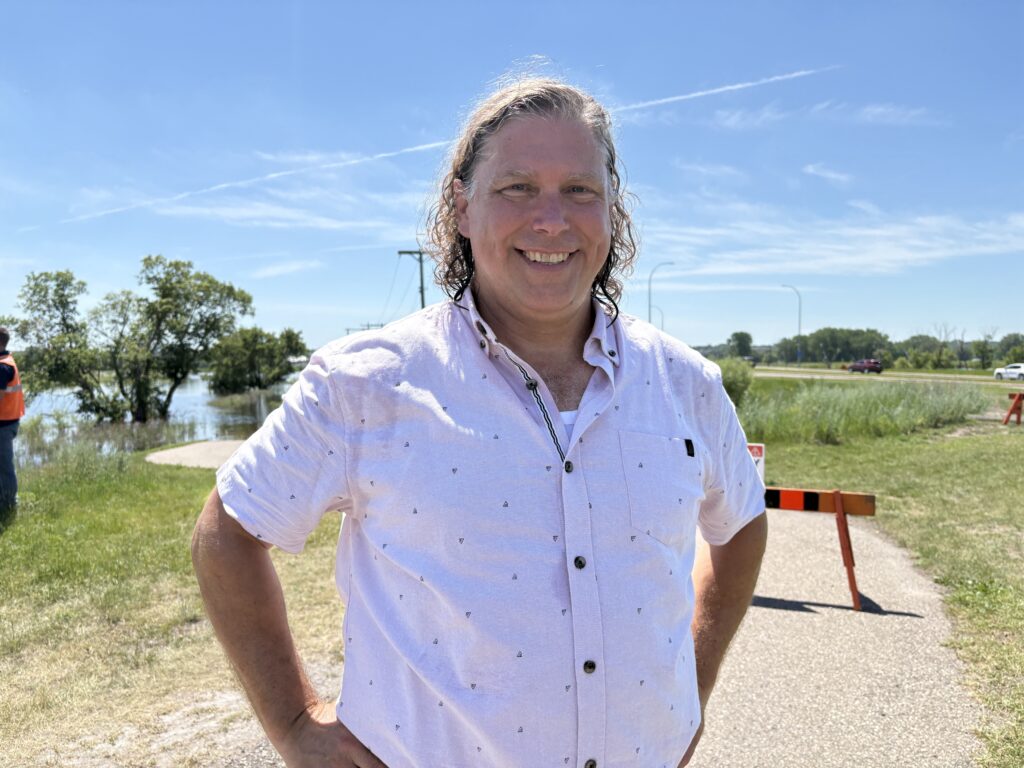
Residents in Brandon are being spared large-scale flooding thanks to the dike network that was largely built in 2011.
Fawcett said there would have been significant damage without the flood barriers, particularly at the pace the rising waters came in.
He said the lack of rain in the past week has also been a big help.
“We’re really grateful for all the work that’s gone on over the years that have helped make this a more manageable situation,” he said.
“Of course, I also want to thank the weather for working out.”
Brandon declared a state of emergency on July 4th, and the city immediately began preparing, something that Director of Engineering Services Kyle Winters says made all the difference.
“We were able to get a really good jump on things, and with that a lot of our action items were wrapped up by Friday, Saturday. So we kinda got ahead of it, and we’re wrapping things up before we received our peak, so it was good,” said Winters.
Michael Danyluk has been living in Brandon for 30 years; he says the flood is nothing like 2011, but that this year’s flooding doesn’t surprise him.
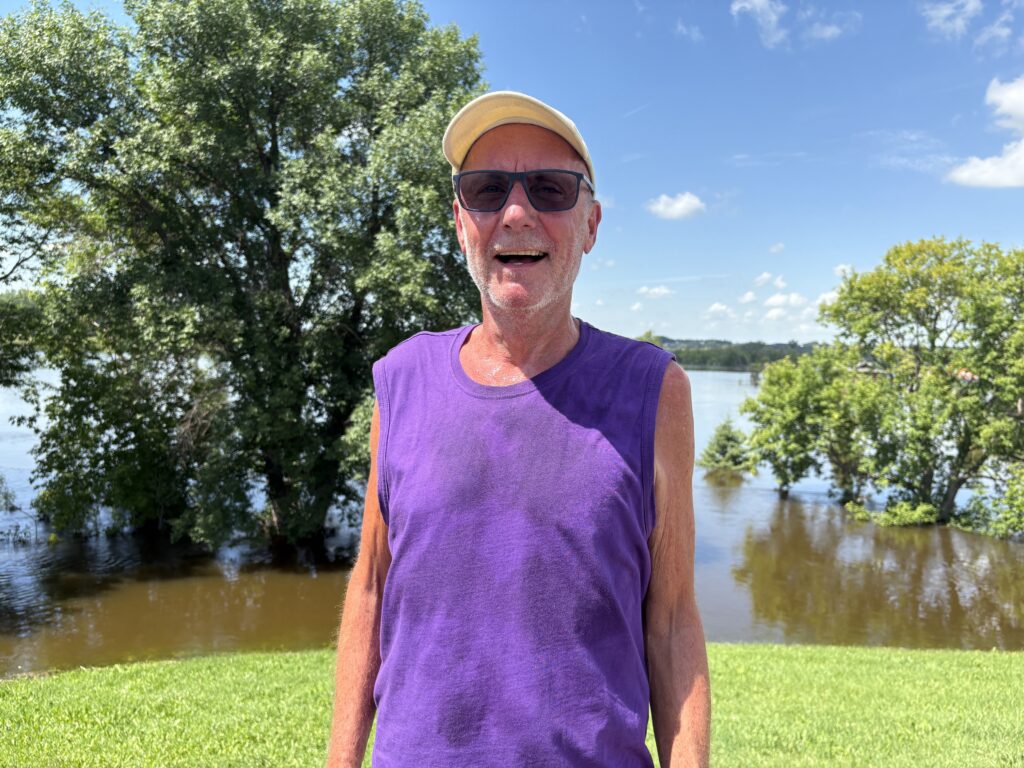
“It’s global warming, get used to it,” said Danyluk. “It’s devastating, but it’s not as serious as it looks.”
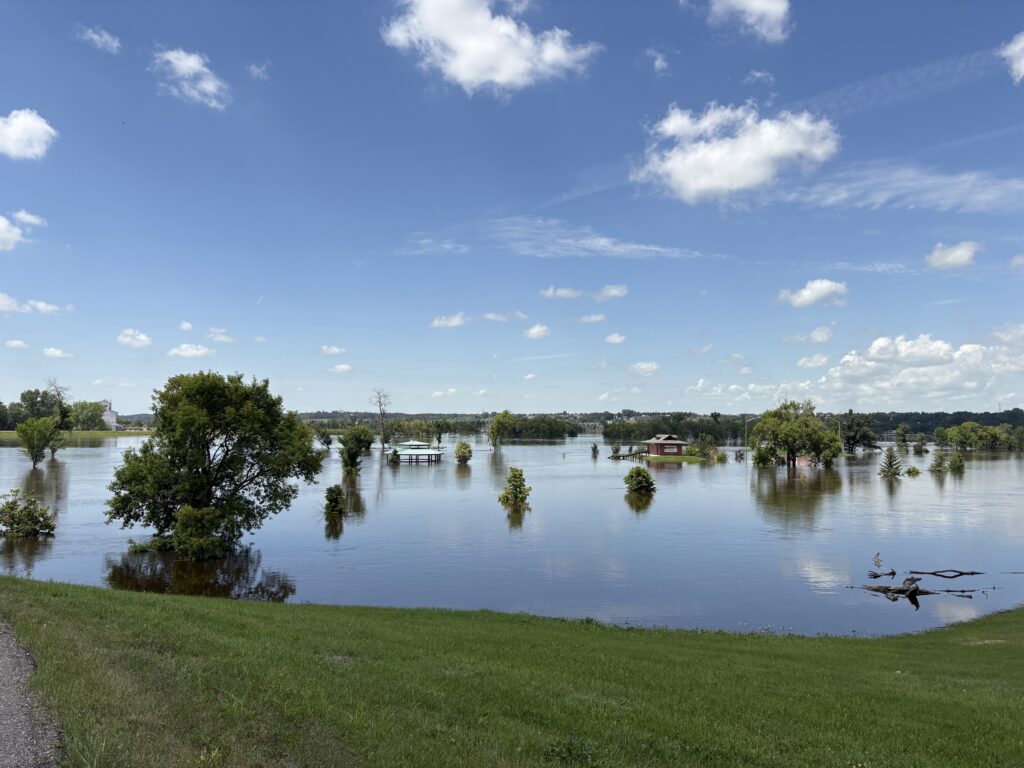
The City of Brandon said that since July 7th, the water has risen 7.5 feet, and over here in Dinsdale Park it’s looking more like a water park.