‘Changed my life’: Indigenous-led program keeps Manitoba kids out of child welfare system
Posted December 6, 2022 11:09 am.
Last Updated December 6, 2022 11:14 am.
An Indigenous-led initiative is helping reunite children with their families, getting them out of the child welfare system.
Over the last three years, 263 children have been reunited through the Family Group Conference Program.
Marina Coates was forced to place her son in the care of family through Child and Family Services back in 2018, while she sought addictions treatment. But after a year and a half after starting the program, she was reunited with her son.
“I got him back when he was three, on my 30th birthday,” said Coates.
“It definitely does take a village to raise (a child) and I am proud to be a part of the Ma Mawi village.”
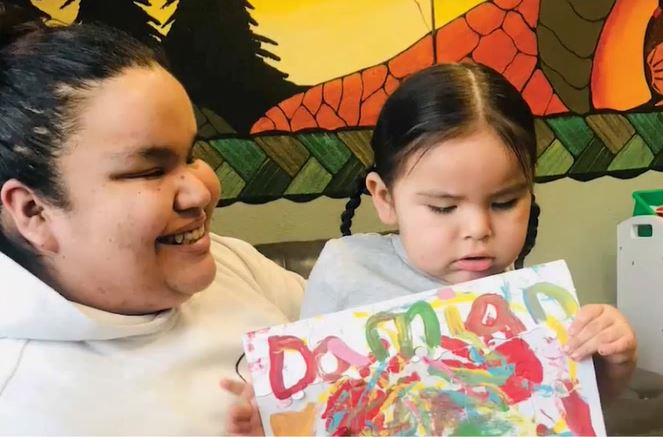
Marina Coates. (Credit: Family Group Conference Program)
The Family Group Conferencing Program is based off a model used by the Māori people in New Zealand.
People are paired with a mentor and take part in culturally based initiatives. The program was first introduced to the Ma Mawi Wi Chi Itata Centre more than 20 years ago and has been helping families like Coates get back on the right track.
“Coming into this program, I was definitely a turtle,” she said. “I had the mentality of just watching, observing. I had the mentality of no one wants to help me because I burnt every bridge before coming into this program because of being addicted. My family turned their backs on me. This program helped me build my own family with them.”
Randi Thomas was in the same situation Coates was in. He was battling addiction and lost his four kids. Thomas is now 16 months sober due to the program and says the initiative forever changed his life.
“Now I have all my kids home,” he said. “I’m doing men’s programs. Just doing stuff that help me learn things as well and I am just grateful to have this opportunity and be a part of this.”
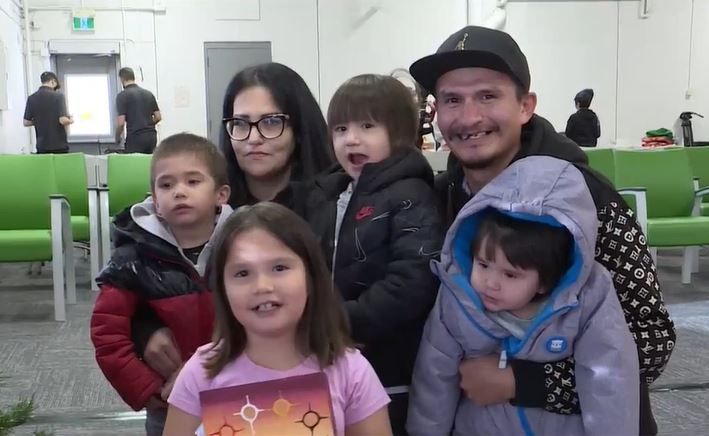
Randi Thomas with his family. (Credit: CityNews/Alex Karpa)
A report released Monday showcased the success of the program. Over three years, between April 2017 and March 2020, 655 children took part in the process. In that time, 263 children are now living with their families and another 139 are waiting to return home.
The program also diverted 141 children from CFS involvement. The evaluation found the program had a 98 per cent success rate in family reunification and diverting children away from the child welfare system.
“Children are where they belong, with their families,” said Diane Redsky, the executive director of the Ma Mawi Wi Chi Itata Centre. “This is where the partnership between a mandated agency, a non-mandated agency like the Ma Mawi Wi Chi Itata Centre and the family are working together to create the best safety plan and the best plan for that family and the care and protection of their children and that is the way forward.”
Redsky says the centre is strongly advocating for the program to be part of the Child and Family Service Act to have it rooted in legislation, so it is mandated.
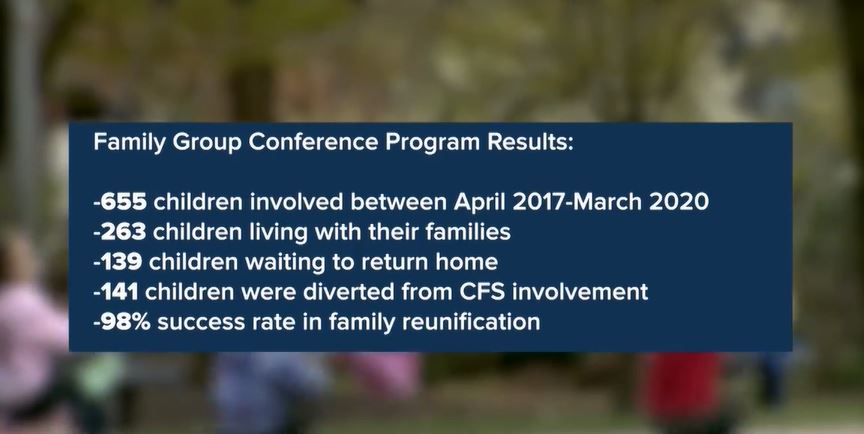
Statistics on Family Group Conference Program. (Credit: CityNews)
Families Minister Rochelle Squires says she will begin conversations surrounding the next steps of this process.
“We can continue to capture this wonderful success and see it spread and grow and work on our mutual goal of reducing the kids in care, keeping families together, and ensuring that when families need that support that they require, that they are actually getting it,” said Squires.
The report says the program saves the province more than $9.2 million annually, but ongoing sustainable funding and resources are imperative to meet the community’s needs.
“This program really changed my life,” said Coates. “Don’t give up. There are people that are out there. You may think you are alone, but you are not.”