Fine particulate matter may trigger immune response: Montreal researchers
Posted December 16, 2025 7:38 am.
Air pollution, particularly PM2.5 particles, appears to trigger an immune response that could cause autoimmune diseases such as systemic lupus, according to a study published by Montreal researchers.
These findings contribute to a better understanding of the origin of autoimmune diseases, said study co-author Sasha Bernatsky of the McGill University Health Centre Research Institute, and show that fine particles are not only dangerous to heart and lung health.
“We are exploring the idea that the immune system may be affected by air pollution,” explained Bernatsky.
When the immune system detects an intruder, she added, it produces antibodies. Good antibodies are those the body needs to defend itself against a virus or microbe, but “too many antibodies can cause disease because your immune system reacts too strongly.”
“There are several reasons for this, but one of them could be air pollution,” said the researcher.
By analyzing data from Ontario—the country’s most populous province—Bernatsky and her colleagues found that fine particulate matter in air pollution was associated with higher concentrations of a biomarker linked to autoimmune diseases, such as systemic lupus.
More specifically, the team found that samples from people living in areas with high levels of fine particulate matter (PM2.5) pollution were more likely to have higher concentrations of antinuclear antibodies (ANA).
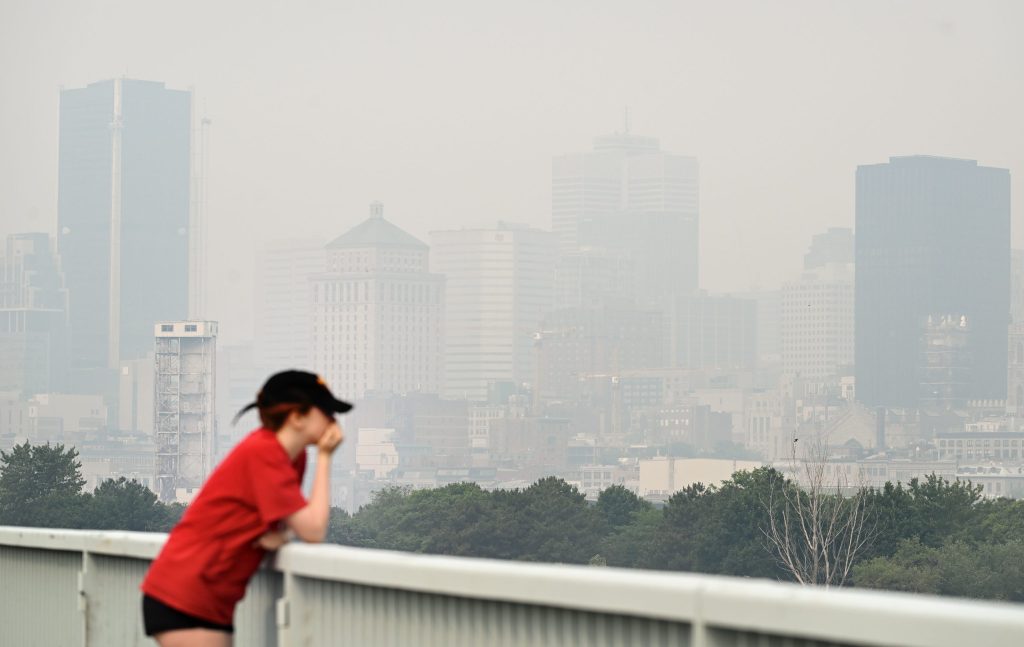
PM2.5 particles are so fine that they can lodge deep in the lungs, enter the bloodstream, and become a chronic source of inflammation. They can be naturally occurring (such as from forest fires) or man-made (such as from factory combustion or engines).
“We found a significant association, particularly at the highest levels of these antibodies,” said Bernatsky. “This work and other studies we are currently conducting are building a body of evidence showing that air pollution can enter your bloodstream and trigger an immune system response.”
In a study published in 2017, Bernatsky documented that living near industrial sources of fine particle emissions was linked to an increase in blood markers for another autoimmune disease, rheumatoid arthritis.
It would therefore appear that the changes that occur in our bodies when exposed to air pollution go far beyond a simple asthma attack, she said.
“We are beginning to understand that antibodies and inflammation may in fact play a role in many diseases, even diabetes, cancer, and heart disease,” Bernatsky concluded. “So it was very important for me to provide evidence suggesting that the environment, and more specifically air pollution, contributes to certain immune system disorders, including sometimes systemic lupus.”
While air quality in Canada is much better than in other places, researchers point out that no level of exposure to PM2.5 is safe. Not all Canadians are exposed to the same risks, as some live near polluting industrial facilities or major highways, or in areas affected by forest fires every year.
Autoimmune diseases such as lupus also disproportionately affect women and non-white populations, including Indigenous peoples.
The study was funded by the Canadian Institutes of Health Research and conducted under the methodological supervision of Audrey Smargiassi, professor at the University of Montreal and co-author of the study.
Its findings were published in the journal Rheumatology.
–This report by La Presse Canadienne was translated by CityNews