Environmental concerns grow as second U.S dairy farm near Red River gets green light
Posted September 27, 2025 4:59 pm.
Last Updated September 28, 2025 10:49 am.
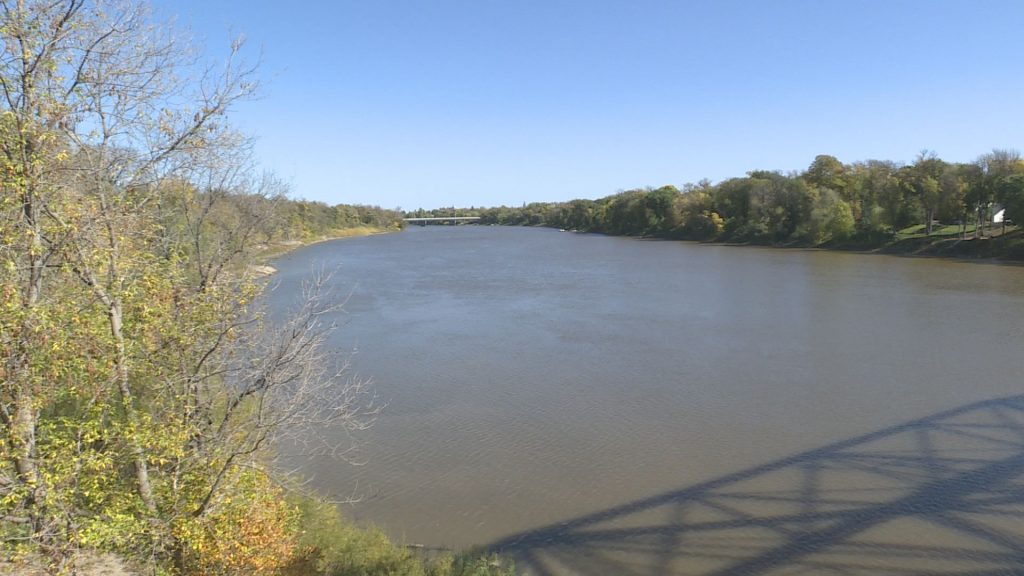
Manitoba advocacy groups and politicians are sounding the alarm after a mega dairy farm in North Dakota has been approved, the second in recent months, within 1.5 miles of the Red River. The 25,000-cow operation will be producing massive amounts of animal waste, which experts say will have a devastating impact on the Red River and Lake Winnipeg.
The mega farm’s waste will be stored in a massive lagoon the size of 52 Canadian football fields. Experts say the manure slurry will inevitably flow into the river.
“Lake Winnipeg is so stressed right now; any little bit more is going to be the nail in the coffin,” said James Beddome, executive director at Manitoba Eco Network. “It’s in one confined operation a mile and half away from the red river, almost certainly you’re going to see run off get into the river, and I don’t have to tell people that Lake Winnipeg is extremely threatened, one of the most endangered lakes in the world, and nutrient flows are what’s going to lead to toxic blue green algae.
The waste contains bacteria like phosphorous and nitrogen, which toxic blue green algae uses to bloom. This algae can be harmful to wildlife, domesticated dogs, and even humans.
“We know that it’s already suffering from an overload of pollutants over so many decades,” said Kaitlyn Mitchell, director of legal advocacy at Animal Justice. “So, to contribute even more, and add all of this affluent from these downstream facilities would be absolutely devastating for the lake, the people that rely on the lake, and the animals that live in the lake.”
“Any time that we’re hearing the type of numbers with these mega dairy farms, its deeply concerning when it’s that close to our watershed,” said Mike Moyes, Minister of Environment and Climate Change.
Moyes says the province has referred to this to the international joint commission and are doing what they can to prevent this type of pollution to the lake.
“It’s challenging, because as we know that water flows over jurisdictions and over boundaries,” said Moyes. “That’s why we need to work together with our counterparts in the United States, that’s why I wrote to the governor there, as well as at the federal level, that’s why I also sent a letter to my federal counterpart, the environment minister federally, and we’re going to work together to try to get to the best outcomes for this.”
“We’re truly in an era of elbows up,” said Mitchell. “So, I hope our politicians will bring that mentality to this issue because Lake Winnipeg is worth fighting for.”