Winnipeg Fringe brings out unique characters who share deep love for the stage
Posted August 27, 2025 1:21 pm.
Last Updated August 27, 2025 1:29 pm.
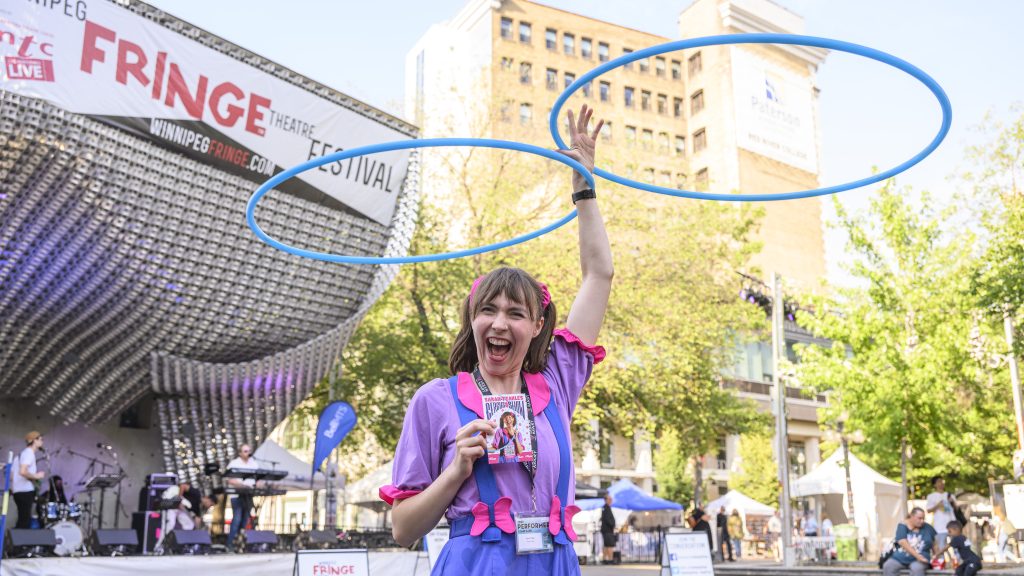
For two weeks in July, Winnipeg’s Exchange District transforms into a hub of theatre, music and artistic freedom: the annual Winnipeg Fringe Theatre Festival.
Hundreds of performers, behind-the-scenes artists and volunteers make it an iconic part of summer in Manitoba.
But the heart of Fringe isn’t only about which shows to see; it’s about the community behind it – both on and off the stage.
“I’ve seen many shows over the years at the Fringe and some of them are my top shows I’ve ever seen,” said Chuck McEwan, the Winnipeg Fringe Theatre Festival’s executive producer. “Some of them are also some of the worst shows I’ve ever seen. But that’s the nature of Fringe. As long as artists are doing their best.”
A fringe festival is an independent performing arts festival that includes a wide variety of indoor productions.
“That includes regular plays, dramas, comedies, musicals, stand-up, improv, puppetry, cabaret, magic, you name it – it’s at the Fringe,” McEwan said.
“The original Fringe started in Edinburgh, Scotland, over 70 years ago. And from that success, giving artists that opportunity to perform, it spread around the world and now in Canada alone we have over 20 fringe festivals.”
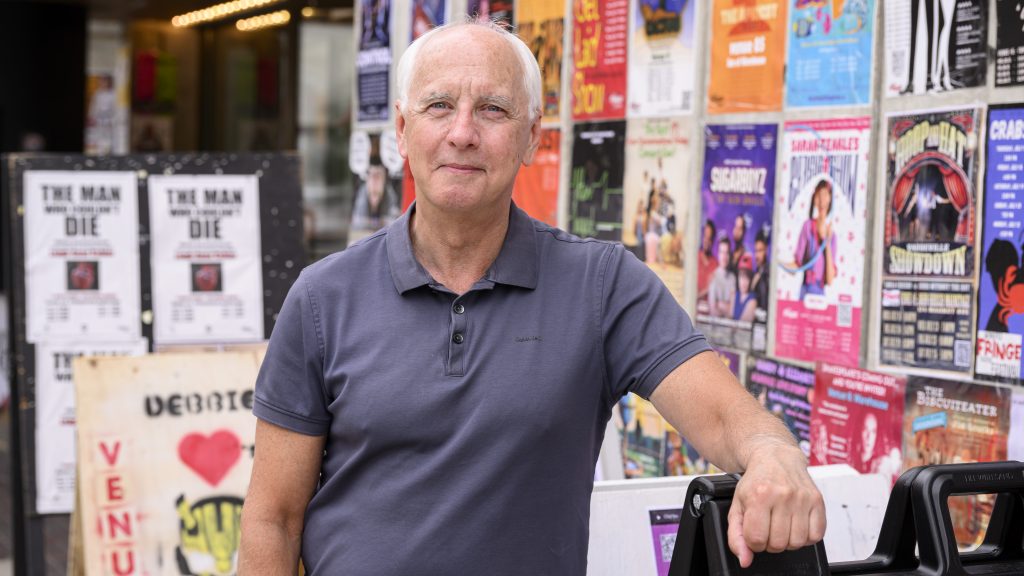
This year, McEwan worked his 31st Fringe Festival. He was there at the second-ever festival in Winnipeg.
“My first year was 1989,” he said. “I was a stage manager for the University of Manitoba production that they submitted, and that year I got to see so many amazing shows from around the world. I got hooked. And I’ve been part of the Fringe ever since.
“What I think is special about Winnipeg Fringe primarily is our audiences. They are so supportive. From our very first year, they came out to this wild, wacky thing that – they didn’t really know what it was, the fringe festival. And supported these young, independent artists from here in Manitoba, from across Canada and around the world, and just gave it a shot.
“Anybody can put their name into their hat to do a show. So we have a lot of university students, recent graduates, independent professional artists and theatre companies as well as touring artists from around the world trying to cobble together a summer tour of three to for months going to maybe, five, six, seven, eight fringe festivals.”
McEwan says part of the “wonder of theatre” is bringing people together and learning from the art on stage.
“There’s two ways that that works,” he said. “It allows the artists to see what other artists from around the world or across the country are creating and how they’re creating, there’s that great way of deciding, ‘I like that little tip or idea.’ And it’s also great for the audiences because they get to see how artists from different communities tell their stories and what those stories are. So it’s a really unique environment.
“We give the artists complete creative freedom to tell their stories the way they wanna tell them and we also give the audiences to say, this is a hot show, this is not so much a hot show.
“Some stories are topical to the year or the past years and what’s happening around the world, but by and large I think a lot of the stories stay the same because they’re personal stories. They’re about challenges and opportunities that are universal.”
Part of the success of the Winnipeg Fringe is due to the festival’s volunteers – like Danielle Carriere.
Carriere, now a team leader, started volunteering with the Winnipeg Fringe in 1989 – meaning this year was her 36th as a volunteer. It also means she’s accumulated her fair share of stories over that time.
“There’s been some really hilarious discounts through the years,” Carriere recalled. “I think the most memorable one was you could get into a show for a free if you came nude with just like, a sock covering your private parts. And one senior citizen, a gentleman did that, and got into the show for free.
“You see unique things like that in the programs. It hasn’t happened in a few years, this one was about eight or nine years ago. But the last day, this gentleman was walking down the street with a sock, and yeah.
“Very brave. I would not be doing that. I would be paying full price.”
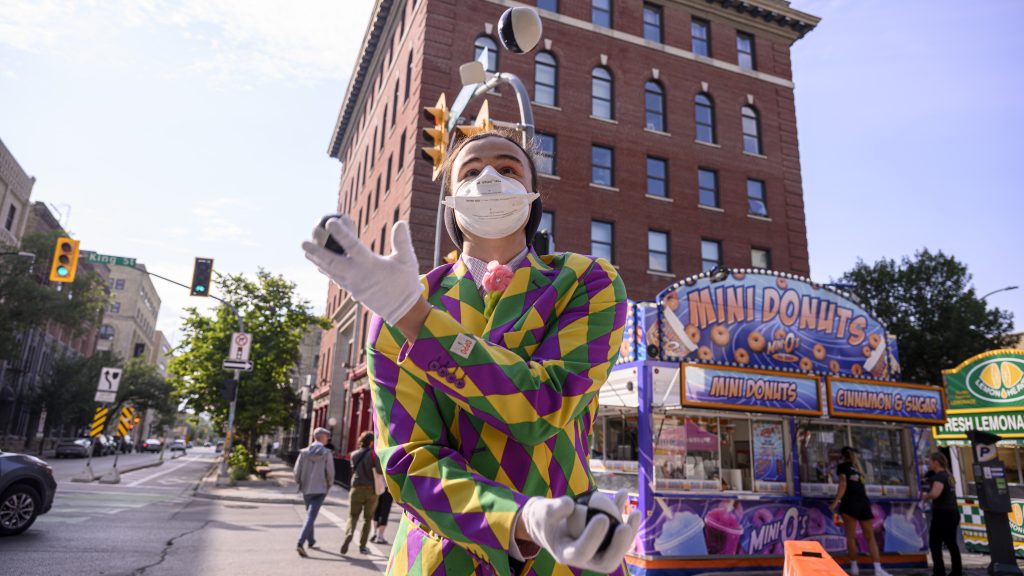
Carriere says volunteering at the festival allow you to see things from a different perspective.
“You get to see the magic, the magic tricks behind-the-scenes that most people wouldn’t realize wouldn’t realize is happening when you watch it from the audience,” she said.
The festival can also lead to “some pretty solid friendships,” she added, with fellow volunteers, patrons, and even performers.
One of those friendships is with volunteer Debbie Woodfine, who started at Fringe in 2014.
“The Fringe allows me to be me, any which way I am. And I love that,” Woodfine said.
“It is the friendliness, the people, the creativity, the atmosphere of Fringe and the togetherness. That part about getting to see the people that you’ve seen over the years. We were talking earlier about how, with Fringe, you might not see anyone between one summer and the next but it’s like you haven’t been apart.”
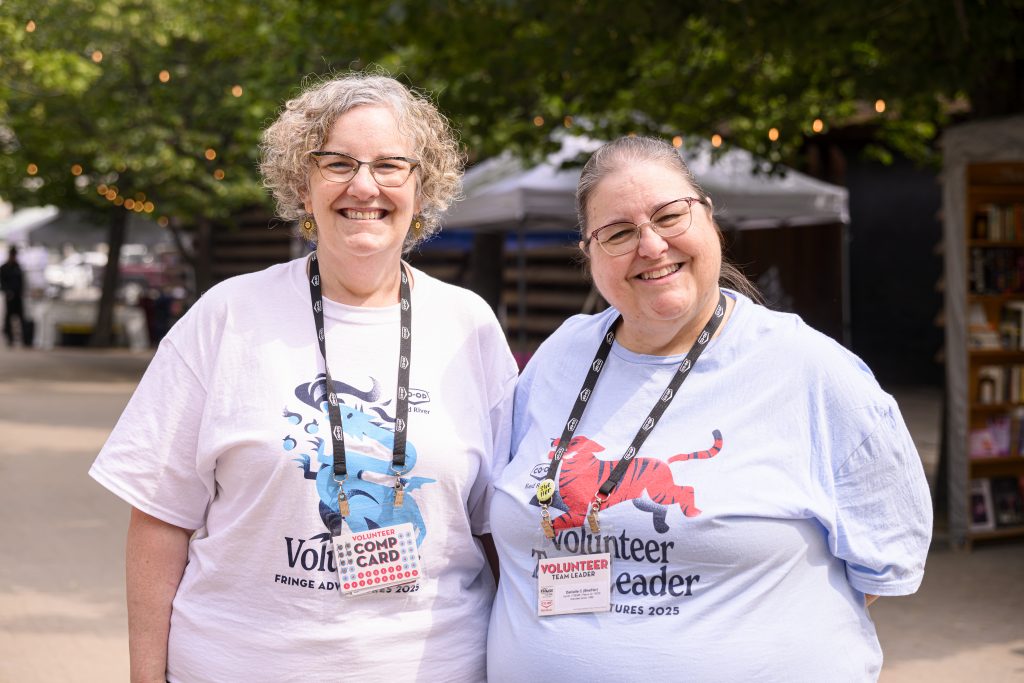
Both volunteers shared fun memories of their time at the festival.
“The Warehouse Theatre is where we had the orientation,” recounted Carriere. “It was, ‘OK, we want you on the street, we’re going to take a photograph of you from the roof so we’ll be on the ground looking up at the roof. We’re going to take a picture of you. It’ll be great.’ We’re all there and we’re all bright, happy, shiny people looking up at the camera and this huge bucket of water comes pouring down on us.”
“The mention of the water brought back a Kids Fringe memory that I love,” said Woodfine. “Thunder started and a lot of kids don’t like thunderstorms. And we’re under our tents and whatnot. And in order to have the kids not realize the thunder so much, I’m like okay. Are you ready? We’re gonna make more noise than the thunder! Come on everyone! And I got them banging tables so much that we were louder than the thunder. The storm went by and we were all having fun.”
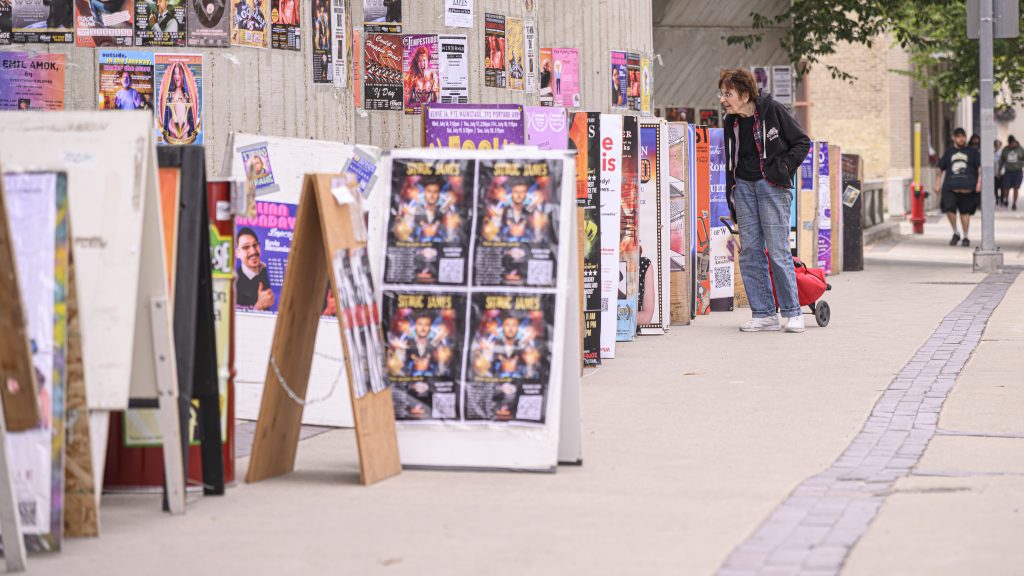
The Winnipeg Fringe Theatre Festival has always been about taking chances — on new works, new ideas, and on yourself.
For artists, it’s not just about what happens on stage. It’s about everything it takes to get a show there: the planning, the setup, the nerves, and the hope that when the lights come up, it all connects.
“Sugarboyz: A Boy Band Musical” was one of the shows at this year’s festival – from director and stage manager Kara Joseph, and performer and production manager Monique Gauthier.
Monique Gauthier: The show follows a sort of washed-up boy band, I guess is the best way to describe them. After a tragic event happens.
I play the character of Playboy, which he’s sort of like a raunchy, womanizing sex icon I guess, is the best way to describe him if that’s OK!
Kara Joseph: The thing about this show that’s really special to me is that on the surface, it’s really fun. It’s really silly and energetic. But there’s so much heart to it.
It’s a story about friendship and it’s a story about loss.
It’s been a really special thing to be able to kind of connect with each other and experience our own relationship to loss and grief as we navigate this show.
Gauthier: There’s so many funny moments and it’s just really fun.
It all starts with the inception of an idea. And the way that JHG (Creative) comes together with forming their ideas is usually through a pitch session. So it usually ends up that we’re all at somebody’s house or sometimes here at the Gargoyle (Theatre) and we’re just riffing on ideas.
I don’t remember who exactly came up with the idea, I think it was Ian our technical director, but he came up with the idea of boy bands and we kind of riffed on that idea a bit and that’s kind of how the inception of Sugarboyz came to be.
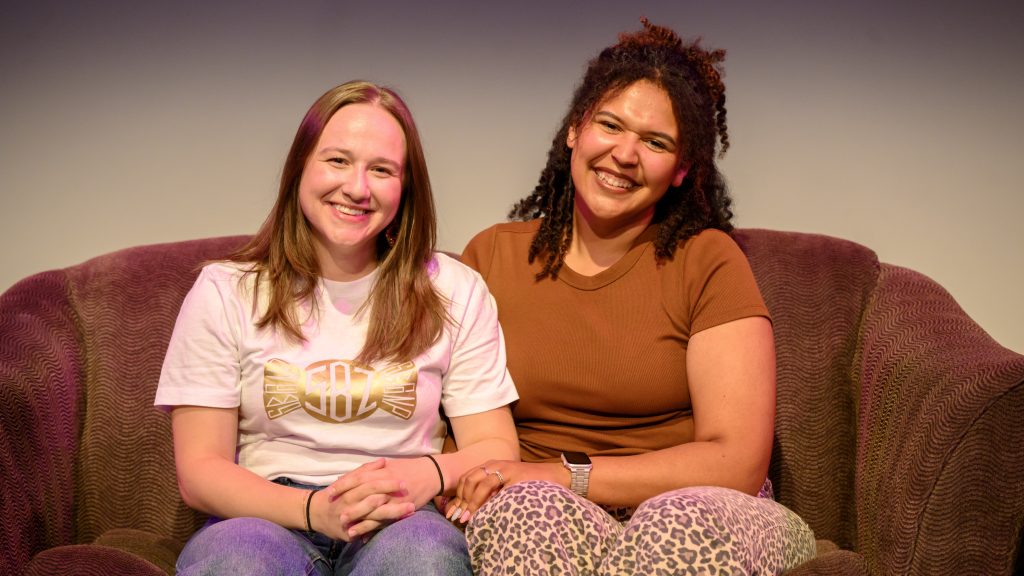
Joseph: We try to avoid a lot of the kind of traditional rehearsal stuffiness and really allow ourselves to be really creative and free and fun.
It’s a 15-minute set-up, a 15-minute teardown and it is like panic-inducing a little bit every time we arrive at the theatre because a lot goes into it. For example, on our opening night we forgot a really important set piece. We just didn’t bring it up onto the stage. I think we played it off pretty cool?
Gauthier: Played it off so cool. Thankfully Andrew, who’s the owner of the Gargoyle, saved our butts.
Obviously things like that can happen ‘cause it’s live theatre. That’s the beauty of live theatre, too, right?
We just kind of always try to push our boundaries and see what we can do, which is really great and Fringe provides an awesome platform to do that.
Joseph: The house opens and it’s go time. We’ve got people pouring in and we’re just, I’m just making sure that you know, our fog machine is working and the music and the program’s up and then it’s showtime.
We always have really, really responsive audiences. We start them off feeling like we’re at a concert, right? So everyone is just ready to woop and yell for us and it really helps take us through the show so. I love that. It always feels really good.
Gauthier: I think the words that I’ve been using to describe this show so far is ‘electric’ and it truly feels electric. Like, when you’re coming out, playing a boy band, obviously you’re like, the audience is treating us a little bit like pop stars? And it feels like that. It feels really fun to be able to hear people screamin’ for us before we even enter the stage. It’s crazy.
Joseph: It feels incredible every single time. Every single show feels magical.
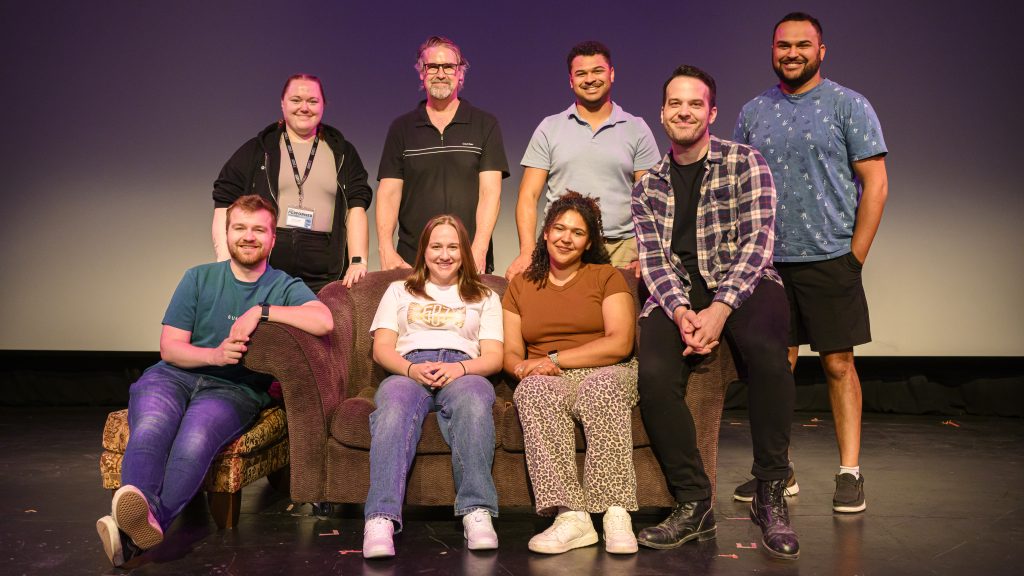
Gauthier: Yeah, it’s something we definitely don’t take for granted. Even yesterday we had a Monday at 10 p.m. show and I think we had five seats left in the audience. Monday. At 10 p.m. It was crazy. I came out during curtain call, I teared up because it was so nice to feel the support of Winnipeg audiences and see people supporting theatre.
Every year I feel like it surprises us. Our shows are accessible to a bunch of different audiences and I think that anyone coming to a JHG show is in for a good time.
Joseph: Creating things never gets boring because you’re always doing something new. You’re always kind of playing with your brain in new ways and stuff and so I think it’s really special.
One of the things that makes the Winnipeg Fringe Theatre Festival so unique is it’s never the same experience twice.
Every year brings new shows, new performers, and new surprises. And for Fringe-goers, part of the fun is just seeing where the day takes you.
Meet some of the participants who make the festival stand out.
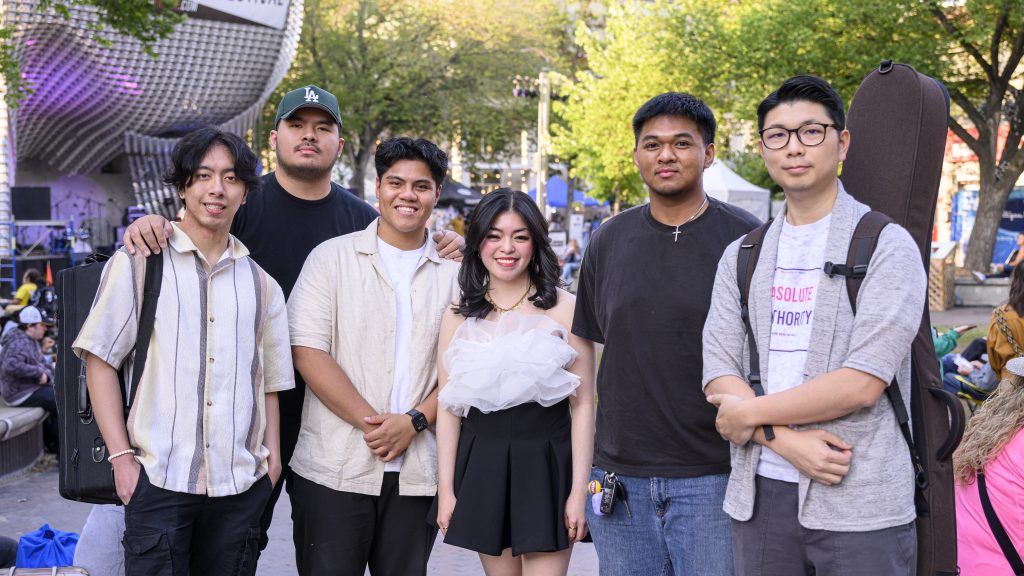
Singer-songwriter Jovelle Balani
“First and foremost, it’s always about the community. It’s about showcasing your art.”
“What I love about it is everyone’s so supportive. It’s such a safe space, really.”
“This is genuinely one of my favourite festivals to play at, mainly because the energy is great and I love playing with my band.”
“My hope for Winnipeg is to become a trademark for the arts … Representation is a big factor for me. I want to be able to inspire other Filipino artists that this is something possible. That this is something, that they deserve to be on that space and they deserve to take up that space.”
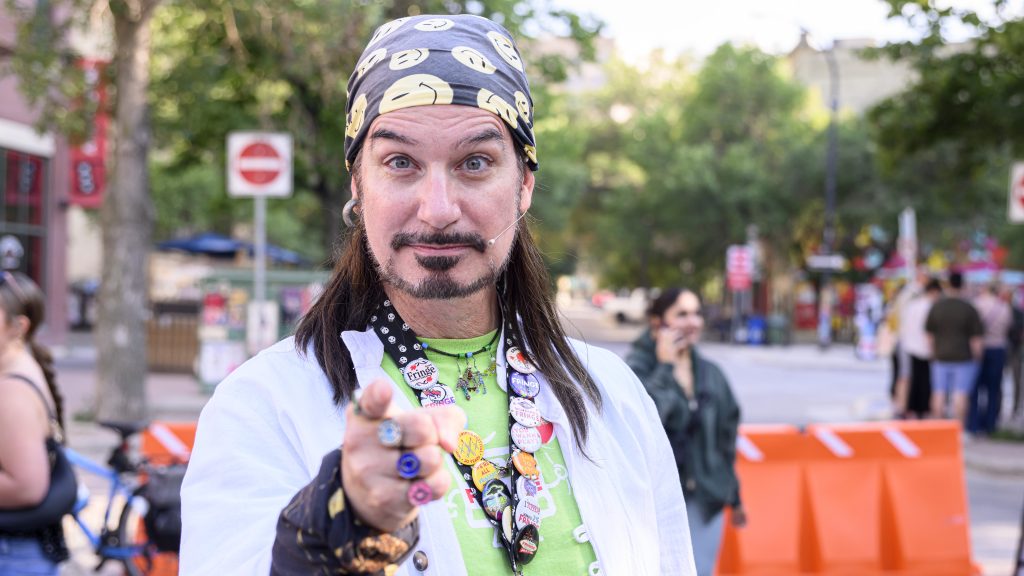
Fringe stage host Tim Webster (more commonly known as Captain Braggadocio)
“It just this mysterious world pops up with its own rules and you have an adventure.”
“What’s not to love? I love the people. I love meeting new people and I love seeing their creative visions. There’s so much happening.”
“There’s something that you’ll like, whether you meet a new friend or whether you see a new show. There’s something here that is going to make your spirit sing and dance with joy.“
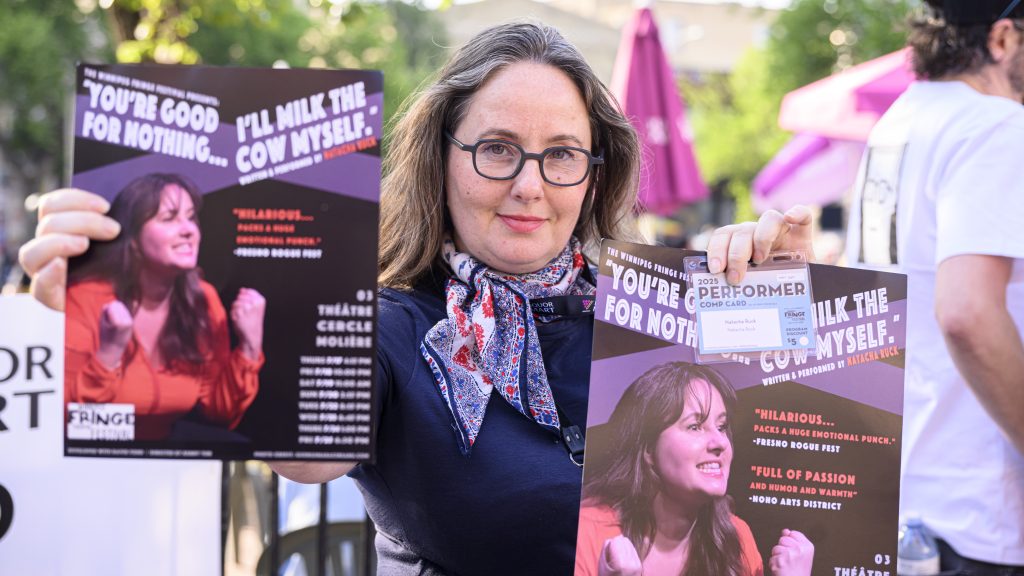
Performer Natacha Ruck
“Winnipeg has a fabulous reputation all around the world, especially at the Fresno Rogue (Festival), and I just heard this was a place to come if you wanted to meet really cool audiences and have a chance to sell out.”
“I’ve been to San Diego, to Fresno, to San Francisco, to Montreal. The people here who are trying to be on stage who haven’t been performers their whole lives, and who are really finding themselves on the stage. And it’s really this moment of pure liberation and pure joy about sharing your story, your experience, your world with people around. It’s life changing.”
“Every day you get to meet a different person and you get to have your mind expanded a little bit, and remember that we’re all different. That we all share so much.”
“Theatre is so important to our communities. We need more theatre. We need more understanding.”
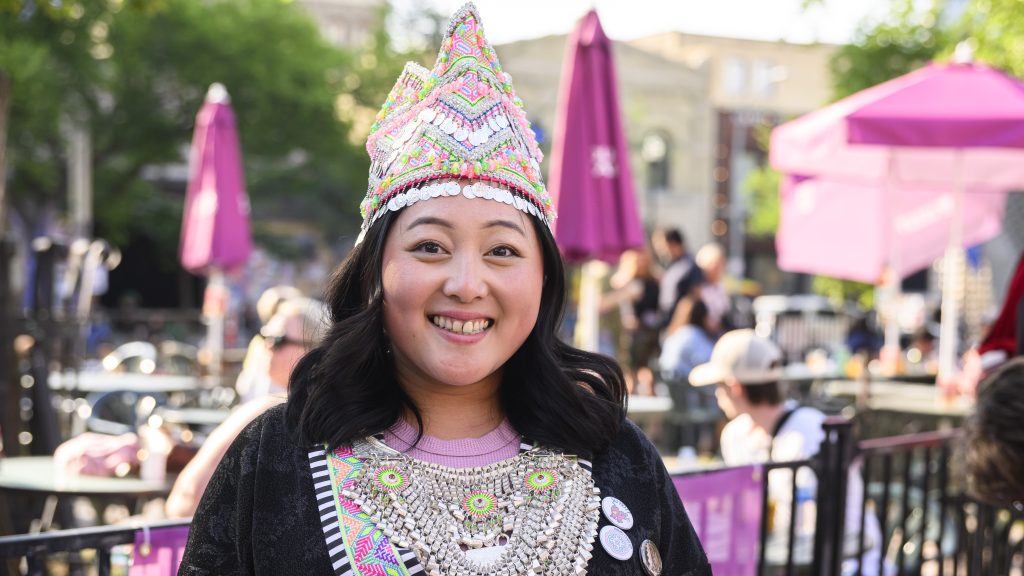
Performer Jasmine Vang
“Okay so the story goes, my clown teacher – he is an avid Fringer. And he gave me a scholarship and he was like, come to Winnipeg. Find other fringes. So he kind of pushed me out the door. The artistic door.”
“I’m originally from Fresno, California. That’s where a lot of Hmong folks live.”
“We hear a lot of Hmong stories in film and in literature, but we don’t really get theatre that’s based on Hmong people.”
“We are a culture that is facing erasure and assimilation. I think it’s a story that a lot of other cultures can relate to. A big part of my show is that, embracing who you are is part of being the future and part of sustaining your culture. Making sure that we’re alive and living the dream and paying tribute to our ancestors.”
“So Hmong Class 101 is a solo play … It is about my Hmong-American identity. I tell a little bit about my family story coming to America and I teach a little bit about the Hmong culture as well.”
The Winnipeg Fringe Theatre Festival takes place every July, with the next edition scheduled for July 15–26, 2026.