Lipedema coverage: Manitoba advocates urge Canada to follow in Germany’s footsteps
Posted July 29, 2025 1:35 pm.
Last Updated July 29, 2025 1:47 pm.
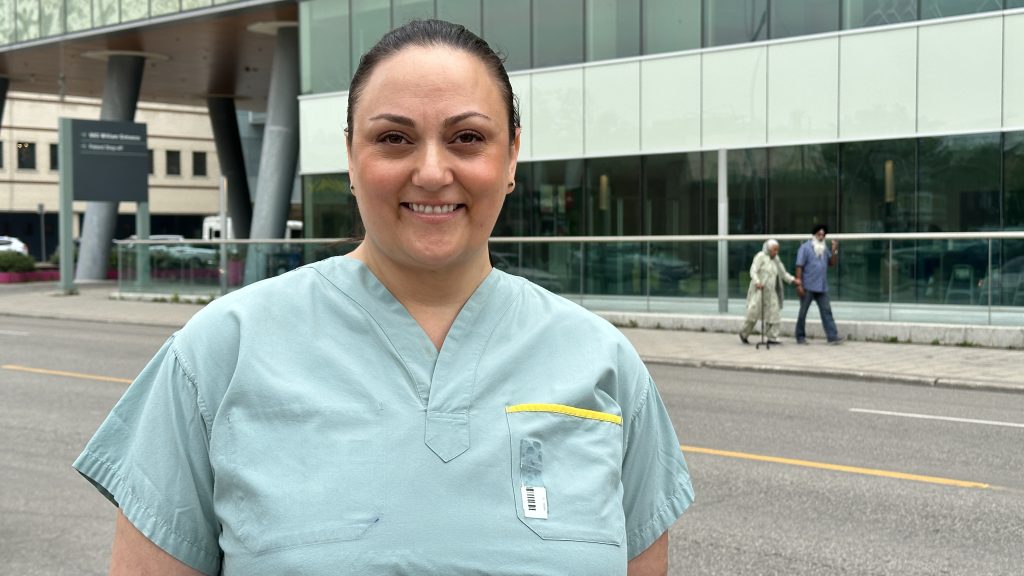
Emma Cloney’s fight to have Canada step up its healthcare coverage of lipedema has been long and difficult – but she’s finally been offered a glimmer of hope.
Cloney and other lipedema advocates have long maintained the various levels of government in Canada need to offer more support and recognition for those with the debilitating illness.
“Lipedema’s not well recognized in Canada, it’s not taught in Canadian medical schools,” Cloney said. “We don’t have a diagnostic code that’s integrated into the billing system. That affects how policy is made.
“The biggest obstacle: we don’t have clinicians that specialize in this.”
An estimated 2.2 million people in Canada live with lipedema, a disease – unrelated to obesity – that causes painful fat buildup and swelling in the arms and legs.
“Lipedema is a genetic, connective tissue disorder that causes dysregulated fat to accumulate disproportionately in the legs and in the arms,” Cloney explained. “Its primary symptom is pain. It leads to immobility and often disability and it affects almost exclusively women, those assigned female at birth.”
Cloney, the vice-president of Lipedema Canada, has undergone nine invasive surgeries to remove fat deposits and excess skin. All have all happened outside of Canada, as there are no doctors in the country who can treat the illness.
“Of those, all but three were covered, leaving me with an outpatient cost of somewhere in the ballpark of between $67,000 and $75,000 personally,” she explained.
She estimates the total cost of her surgeries so far to be approximately $250,000.
“The major obstacle has been that to this date, the lipedema surgery has been listed as an emerging criteria,” she said. “What that means is that this is the loophole that the province has, not to cover the surgery for everyone because under the health act, medically necessary services are required to be covered. Unless they are either emerging or experimental.”
That’s why new research out of Germany – the LIPLEG study – is so important to Cloney and anyone suffering from lipedema.
Earlier this month, German researchers trialed the effectiveness of surgery. Its first results showed that after 12 months of observation, leg pain and mobility improved for nearly 70 per cent of patients who received surgery, and symptoms of depression dropped nearly 40 per cent.
The results led to Germany’s health oversight body to expand surgery coverage for all stages of lipedema under their public health care system; coverage was previously limited to stage three.
“I watched the decision in real time translated from German to English at four o’clock in the morning, which seemed like an inappropriate time to scream from the rafters, ‘yes, yes, we were right!” Cloney said.
“It was unanimously positive and it nears what lipedema patients have been screaming from the rooftops since the beginning.”
Cloney says Germany has always been far ahead of Canada in terms of lipedema treatment. She received wide-ranging care there, including assessment and diagnosis, pre-op, intra-op, and entire teams providing comprehensive care for months after the surgery.
“My experience as a patient in Germany was that it was the first time that I’d interacted with a healthcare team that truly understood my disease,” she recounted. “At no point did I feel the need to qualify myself. And that took me out of a place of constantly feeling like I needed to explain my condition to doctors and protect myself against the things that they just didn’t know.”
Although Cloney is nearly finished her treatment – her 10th surgery will be her last – she’s fighting for another cause: her daughter was diagnosed with lipedema and will need her own treatment.
“It is distressing knowing that her mobility is compromised,” Cloney said. “How long can she wait? How long can you wait? How long can anybody wait for access to medically necessary healthcare to save your mobility and take you out of chronic, debilitating pain?
“There’s a ferocity of advocacy that comes when you realize that your child has now unfortunately been afflicted by the illness that effectively ruined your life.”
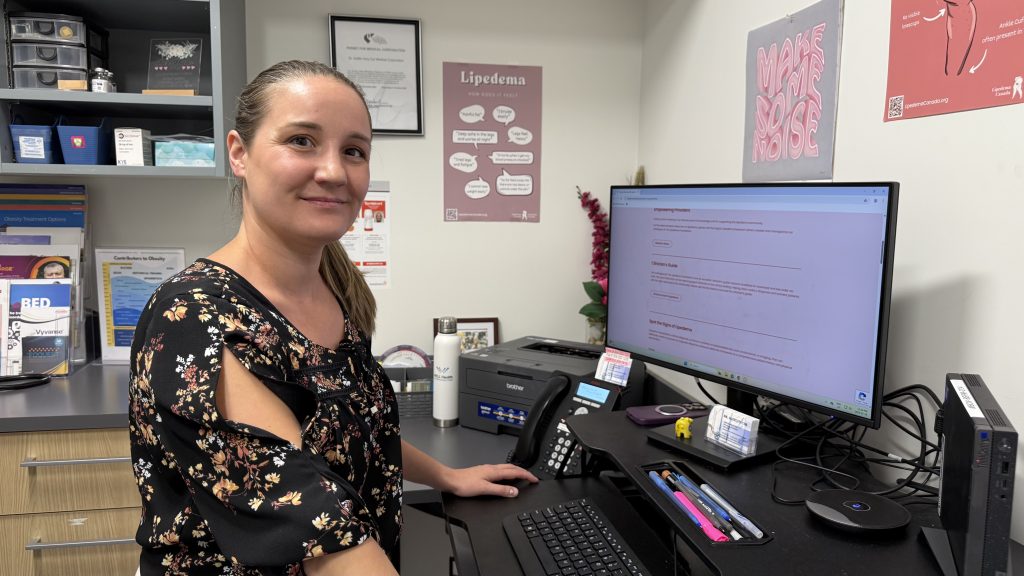
Dr. Kaitlin Cyr, an obesity specialist in Winnipeg, says healthcare practitioners in the country aren’t well-versed in lipedema, making treatment of any kind – whether it’s surgery, lymphatic massage or compression – difficult to get.
“Obtaining a diagnosis is really difficult for patients and just having their care providers aware of what resources are available out there,” Cyr said.
“We still don’t have the specialists in Canada to provide the care. We still have a long way to go.
“There’s been very little knowledge to build on and so the health care system in Manitoba has been focused on lots of other aspects of care.”
A spokesperson for Manitoba Health Minister Uzoma Asagwara said in a statement the province constantly assesses coverage to align with best practices and standards of care by surgeons and physicians, adding the minister has committed to an additional meeting with lipedema advocates in Manitoba.
“Even if we have the surgeons available right now, we don’t have the infrastructure as far as a surgical policy to make sure that patients are receiving the right care, which they have a right to,” Cloney said.
“We really only need one province to pioneer what real healthcare looks like, and I would be so proud for that to be Manitoba.”
Lipedema Canada is looking to contact health ministers across the country to try and get Canada to take its first steps in recognizing lipedema as a serious disease.
“We’re looking for the ministers to please reach out to us and formalize a day for that meeting and help us provide an update to the community that provides hope and also inspires other ministries to follow suit, because Lipedema Canada is ready to take your meeting,” Cloney said.
CityNews reached out to the federal government, which did not immediately provide a statement.
“We are poised and ready to help the government take action, to help advise and to help make the situation better,” said Cloney.
“We have what we need now. And now you need to act.”
The LIPLEG study is set to continue observation and research for the next 12 months.