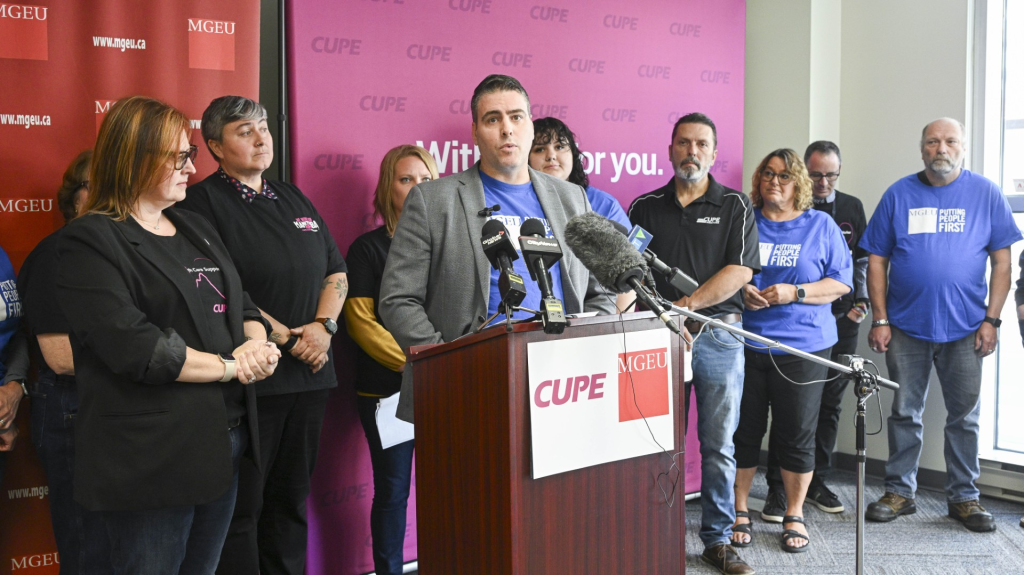
Manitoba health-care support workers could go on strike Oct. 8
Posted September 24, 2024 3:56 pm.
Last Updated September 24, 2024 6:46 pm.
Roughly 25,000 health-care support workers in Manitoba could soon be on strike if a settlement isn’t reached.
A strike notice was served Tuesday morning; it could go into effect Oct. 8.
The Canadian Union of Public Employees (CUPE) and Manitoba Government and General Employees’ Union (MGEU) claim their members are currently the lowest paid health-care workers in Canada.
“The members want better working conditions, better wages, they want to be respected by their employer and the government,” said Shannon McAteer, a CUPE health-care coordinator.
Union leaders say the current deal fails to address critical staffing shortages in hospitals and care homes.
“Our goal all along would be to bargain a deal that all these members here would expect and unfortunately we are not seeing that at the bargaining table,” said MGEU president Kyle Ross.

CUPE Manitoba president Gina McKay says the government has 14 days to offer a fair contract, and that a strike is a last resort in response to what she calls a staffing crisis affecting patient care.
“We are in a crisis right now, but we are willing to pay double – sometimes more than double – to agency workers to fill those gaps,” McKay said. “We’re saying this is a public service, let’s bring it back to these support workers, pay them a fair wage so we can keep them in those positions.”
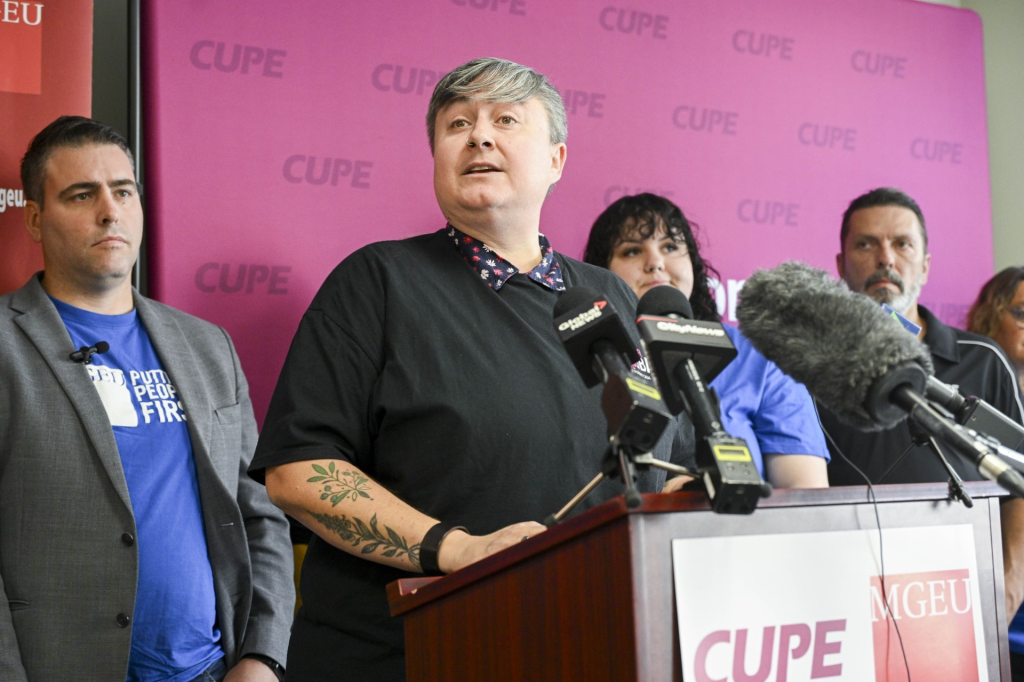
Sept 24, 2024. (Photo Credit: Mike Sudoma, CityNews)
The unions warn that while essential services will continue, the strike will reduce the level of care for many Manitobans.
“We are required by law to provide essential services, it will look really different, but we are going to do everything to make sure the patients, the clients, the residents, they’re not suffering,” McAteer said.
Ross explains many workers are leaving for better paying, less demanding jobs outside health care.
“These jobs are the cornerstone of a lot of communities and now people aren’t taking these jobs,” the MGEU president said. “They’re choosing to work other places. Health care really needs to be an employer of choice or actually have people want to do that work, and we’re just not seeing that anymore because they’re just not competitive in the market.”
The provincial government has yet to respond to the unions’ latest counteroffer, which was submitted on Sept. 5, and told CityNews they do not comment on ongoing contract negotiations.