University of Manitoba study is growing building materials
Posted December 13, 2022 8:28 pm.
What’s growing in these containers could one day become a building material, and instead of growing it in a lab in Winnipeg, it could be grown on-site cutting down on time and construction costs for housing in remote areas.
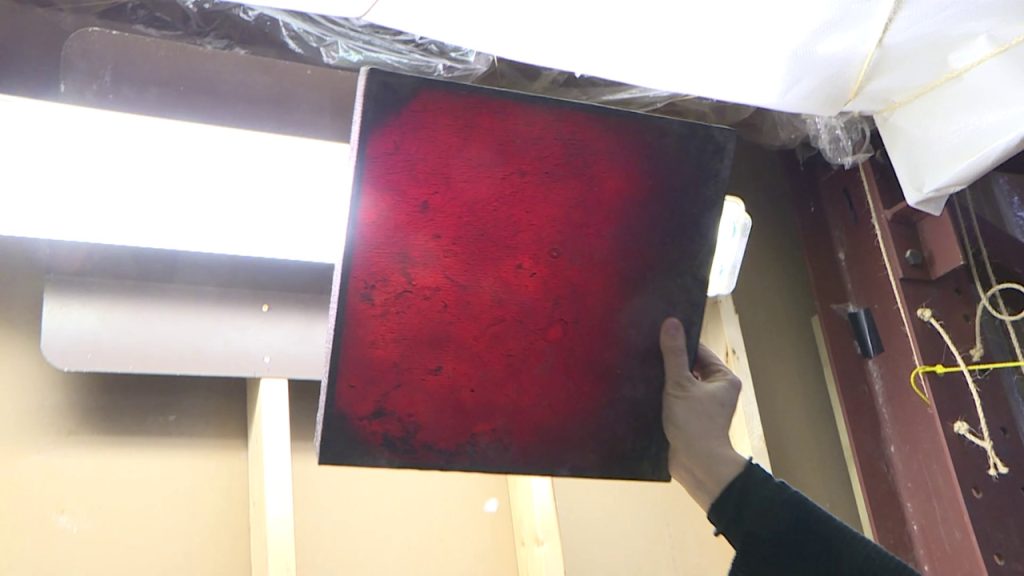
In a small laboratory at the University of Manitoba, Mercedes Garcia-Holguera steps into a growth chamber to check on her latest batch of bacterial cellulose. She is essentially brewing kombucha and turning the thick film growing on the surface into biomaterials that she hopes one day could change the way we design and build structures in Canada.
“When we work with biomaterials, we are using either living organisms or dead organisms but that we are manipulating it to make a new material,” said Garcia-Holguera architect, researcher and assistant professor at the University of Manitoba.
Garcia-Holguera is currently testing the strength of oyster mushroom mycelium grown into shapes that when hardened act like concrete.
The kombucha skin is being tested against Winnipeg’s cold weather to see if it can hold up in extreme temperatures.
Garcia-Holguera hopes the new biomaterials could have applications in remote First Nations, replacing more expensive and harder-to-transport materials.
“As a tool for empowerment, as a tool for helping remote isolated communities to take control over those very expensive costs that they have when they are thinking about a build.”
Joe Ackerman, manager of the sustainability in action facility where Garcia-Holguera works, says the project is pushing the boundaries of what’s possible.
“What Mercedes is doing is very revolutionary because nobody has actually tried to make building skins out of Kombucha and she is giving it a go,” explained Ackerman.
Garcia-Holguera says this project could be transformative by enabling construction materials to be grown directly in the communities where construction is taking place. This would reduce greenhouse gas emissions while providing a sustainable, reliable building material.
“You could have those materials being grown in local communities,” said Garcia-Holguera.