Manitoba monarch butterflies take flight with tiny new trackers
Posted August 26, 2026 5:43 pm.
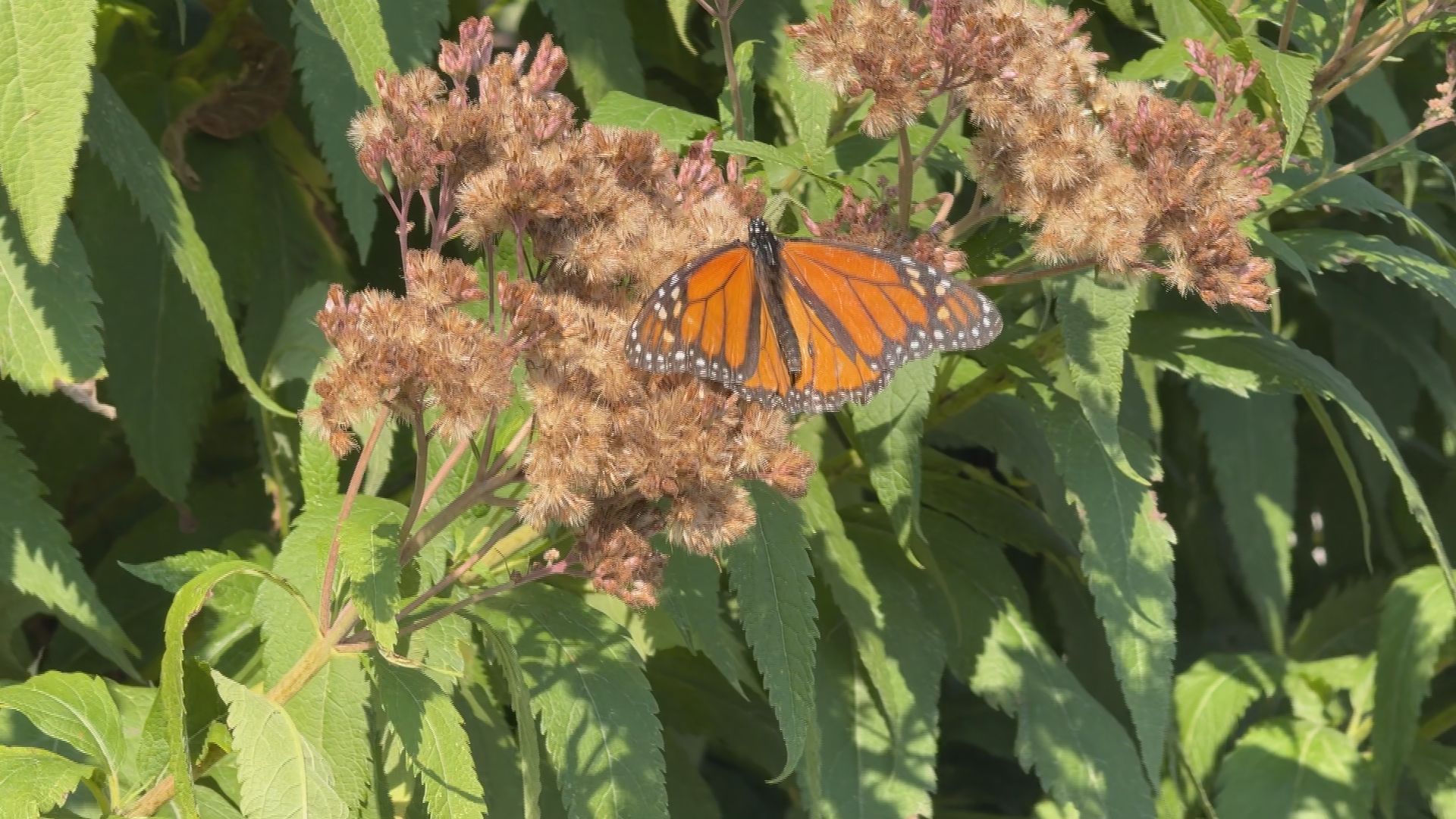
The Living Prairie Museum was surrounded by monarch butterflies that are getting ready for an incredible journey south to Mexico.
This year, a butterfly named Eddie was the first monarch being released with a tiny tracker attached, allowing researchers and the public to follow along the journey for the first time in the province’s history.
“This was a first for me. It was a first for Manitoba,” said Laura Burns, with the Assiniboine Park Zoo.

But before Eddie can begin that journey, there’s a careful process to make sure he’s ready for takeoff. Each monarch is carefully caught, then checked for its health, weight and parasites to make sure it can safely carry a tracker. Those that qualify are then briefly chilled to slow them down, before getting some unusual new luggage.
“We’ve seen a big crash in their populations over the last 25 years. Unfortunately, we haven’t seen a big reversal of that despite a lot of conservation efforts. So it’s really important that we learn more about their whole life cycle,” said Marika Olynyk, with the Living Prairie Museum.
The tiny solar-powered radio tracker is attached between the wings using eyelash glue, essentially giving each monarch a miniature backpack. Its signal can be picked up by telemetry towers while the Project Monarch app allows the public to follow the butterflies’ journey from their phones. Twenty-nine monarchs are expected to be tagged in Manitoba over two days.


“It’s a very long journey. It’s one of the most incredible migrations in the insect world. And not all monarchs make it. So the reason we’re deploying so many tags across Canada is that we know that not all of them are going to make that full migration,” said Burns.
As for Eddie, he got his name because the random code on his tracker happened to almost spell it. But where he goes from here could help answer a much bigger question.
“The point is not that we’ll record all of these monarchs going to Mexico. The point is that we’ll record what direction they go from this portion of their population,” said Paulson Des Brisay, with the Canadian Wildlife Service.

Olynyk added, “These tags are going to give us a whole lot of new information about what route they take, where they stop, what kind of habitat they use, and if they make it all the way to Mexico.”
That information could help identify important migration corridors and stopover habitat, showing researchers where conservation efforts could help monarchs along the way. For Eddie, though, the next step is much simpler. The journey south begins.