Winnipeg police renew crackdown on open drug use until November, promise to include outreach teams
Posted August 6, 2026 10:48 am.
Last Updated August 7, 2026 10:36 am.
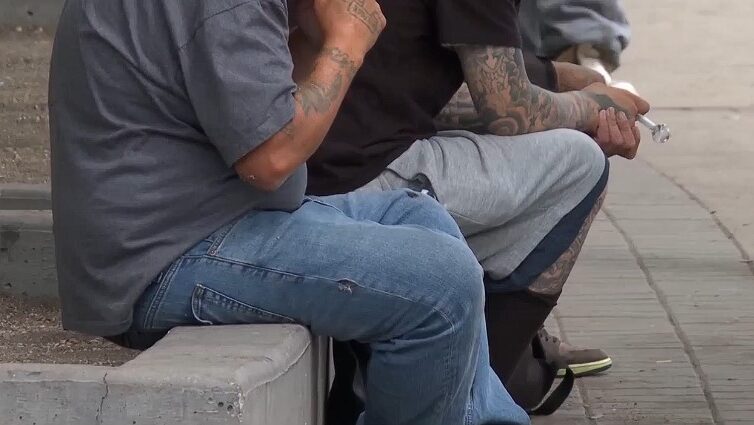
Winnipeg police are resuming their crackdown on open drug use and trafficking in areas of high concern – until at least the fall.
The Winnipeg Police Service says there will be a visible police presence in specific areas identified by crime data, tips and complaints, and emergency calls for service. Those areas are Point Douglas, Osborne Village, Spence and the Exchange District.
The initiative, which begins Friday, will be reassessed in November.
This time, officers will work alongside community outreach teams, service providers and other partners to help connect those in need with resources and supports.
“Enforcement alone will not solve the crisis. Outreach alone will not meet all the needs,” said Winnipeg Mayor Scott Gillingham told a press conference Thursday. “The goal of course must be to break the cycle, to get our loved ones who are on the street, off the street into supports and housing, connected to care, helping them find a path to recovery, to wholeness and stability.
“This is not a choice between compassion and public safety. Winnipeg needs both, and I believe what we’re seeing is both.”
Authorities say a dedicated community coordinator from Ka Ni Kanichik will act as the main link between the WPS and a coalition community organizations like Main Street Project and Aboriginal Health and Wellness.
“It’s showing our community as well as our relatives that we’re not all working in isolation of each other, we’re working together to create that village of support,” said Jackie Anderson, the executive director of Ka Ni Kanichik.
“We know that our relatives will trust who we trust, so we also need to ensure that we have that strong relationship, not only with the Winnipeg police, but also all the community organizations. We need to be ready and prepared to offer what some of those resources may be.”
The involvement of service providers is in contrast to the WPS’ 10-day enforcement blitz — from June 24 to July 3 — that saw community organizations speak out against their lack of involvement.
“While there was a great deal of support for the enforcement actions that we undertook to address public safety issues, there was also criticism about the lack of collaboration, and at that time I acknowledged that community organizations should have part of our efforts,” said WPS Chief Gene Bowers.
“We need to be out there with the community support groups. Definitely, in our meetings, lots of discussions on what the different organizations can do, and learning about those relationships they have out in the streets with the different people. That’s something that we’ve definitely taken into consideration.
“We all need to work together. We’re stronger together and when we’re more coordinated.”
Crime down during blitz
Winnipeg police shared the results of the 10-day enforcement sweep during a press conference Thursday.
Police say officers responded to 1,099 events in the target zones and made 106 arrests, including 93 for breaching conditions or having an outstanding warrant. Five people were charged with possession of drugs, and three people were charged with drug trafficking.
Compared to the same time period in 2025, Winnipeg police say violent crime dropped 16.5 per cent, property crimes dropped 10.5 per cent, and priority zero-to-two emergency calls for service dropped six per cent.
“These localized reductions in both crime and emergency demand were distinct from the broader city-wide patterns and are consistent with the focused enforcement and engagement activities deployed within the target area,” said David Bowman, the director of organizational development and support with the WPS, though he did caution against the small, 10-day sample size.
Leah Gazan, the MP for Winnipeg Centre, was among the more vocal opponents of the blitz earlier this summer, arguing a tough-on-crime approach to a public health and safety crisis only pushes those most vulnerable further to the margins and creates a divide from vital resources.
While the Winnipeg Police Board says it supports the service extending its enforcement action to November, it adds the underlying causes must be tackled.
“These are complex public health and social issues that require sustained and coordinated action beyond policing,” said Colleen Mayer, Chair of the Winnipeg Police Board. “Governments, police, social services, and community partners must work with urgency and purpose to address the root causes contributing to these conditions, so that enforcement activity is matched by meaningful pathways to care and support for those who are struggling.”
Lauren Howell, who lives in Osborne Village, says while having more cops in the area has been positive in the past, she’s happy to see more focus on community outreach this time around.
“I don’t think just going around in arresting people is a very good approach,” Howell told CityNews.
“It’s not really getting to the root issue, which I think is in general mental health. So yeah, I would say a better approach is needed if they just arrested 100 people.”
–With files from Eddie Huband