A.I. misconduct on the rise at the University of Manitoba
Posted November 25, 2025 6:55 pm.
A.I. is everywhere, including on the University of Manitoba campus, and while faculty leaders say work is being done to address its use in academics. Right now, its presence is overwhelming the school’s office of academic integrity and taking professors’ focus away from their students.
“Currently, we’re not ready to handle it,” said Jenna Tichon, the Vice President of the University of Manitoba Faculty Association.
“When their time is devoted to that and not to their students, I think that’s sad. They want to be in the classroom. They want to spend their time doing the job that they love doing.”
Tichon said right now, due to a jump in A.I.-related investigations, students are waiting months for hearings and even longer for appeals, putting a burden on pupils and professors.
“There’s an overwhelming increase in the number of academic integrity cases, and we’re seeing this specifically in the time it takes students to get hearings. It’s very delayed. When students need to get appeals, it could happen several semesters after the accusations, which affects students’ timelines,” said Tichon.
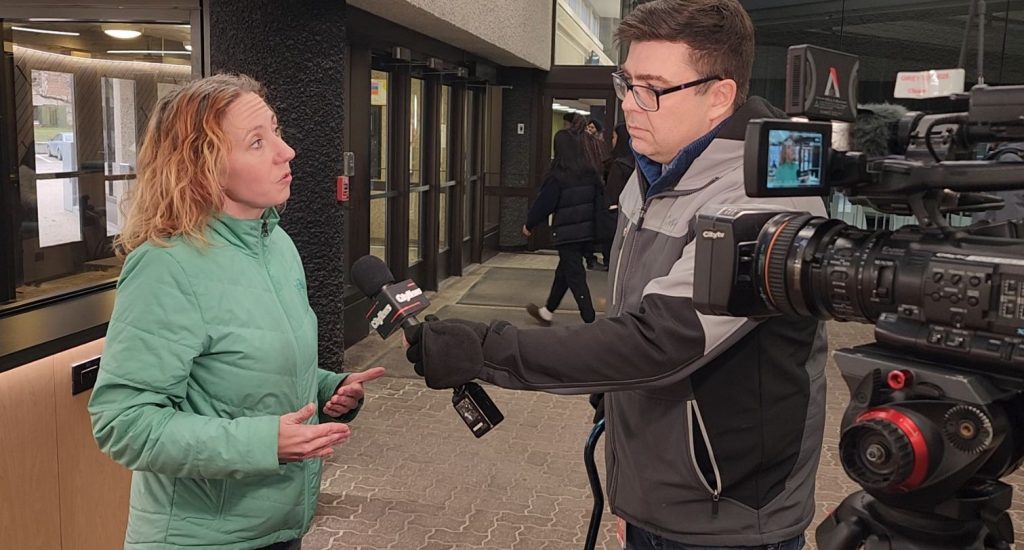
Tichon says right now professors and instructors are being forced to play detective, determining if citations are real or fabricated, as well as any work and preparation needed for hearings, which she says many students are being forced to attend without an advocate present due to delays.
“Anecdotally, we’re seeing more students appear without student advocates, which is not a good outcome for anyone, because they don’t understand the procedure. It’s an emotional procedure to go through, and it’s important that students have those supports, and we currently aren’t able to handle them.”
There is a lot of work happening at the University of Manitoba when it comes to addressing the situation, Tichon said, including an A.I. committee, regular workshops, and conversations about A.I. community guidelines, but she says the situation is anything but static.
Students at the University of Manitoba have mixed emotions about A.I.
“I just don’t think it has any place in any sort of academics. I mean, I can see some use for it in sort of a diagnostic-type stuff, but it shouldn’t be in schools. I don’t agree with it in general. It’s just plagiarism, and it’s kind of ruining people’s ability to critically think,” said second-year U of M student Kaitlyn Taplin.
“I use A.I. to basically create practice tests. I think the best way I think A.I. should be used is as a study partner. So you give ChatGPT your notes or the unit that you want to study, and it will give you practice questions, it will ask you to explain the topic further,” said fourth-year U of M student Asil Mussa.
“Google, any sort of App you go on, A.I. is already on there. So when you go to try and use a search engine, if you try to search anything, the first thing that pops up is ‘A.I. recommends this,’ and it will give you a whole rundown. What I’m in, I usually use textbooks and the material given to you by the teachers. I think A.I. can be helpful, but I think it can be annoying, because it pops up everywhere and it’s hard to escape,” said second-year U of M student Elizabeth Hardman.
While a recent report on academic misconduct found there was a decrease in instances over the last two years, instances of unauthorized content generation and generative A.I. is on the rise, with a new report for 2025 set to be published in February, already designating “unauthorized content generation” as a new type of academic misconduct.
In a statement, the U of M explained in part: “While we do not have the numbers for 2025 yet, we are adjusting our intake processes to respond to the increased volume of requests for support.“
Tichon says right now, while there is a need for more student advocates, addressing the delays isn’t just as simple as hiring more staff to the Academic Integrity, as there must be an ongoing conversation about A.I. on campus.
“In a university community, we can’t have a one-size-fits-all solution, so it’s going to take a lot of effort from a whole lot of people before we get to a place that feels good,” said Tichon.