Mathias Colomb Cree Nation demanding feds, province to be allowed to return home
Posted September 5, 2025 6:13 pm.
Last Updated September 8, 2025 9:32 am.
After more than 100 days away from home, the Mathias Colomb Cree Nation says Ottawa and Manitoba are failing their people.
With 2,200 evacuees still displaced after a power outage shut down their community, leaders are now demanding urgent action to bring families back before winter sets in.
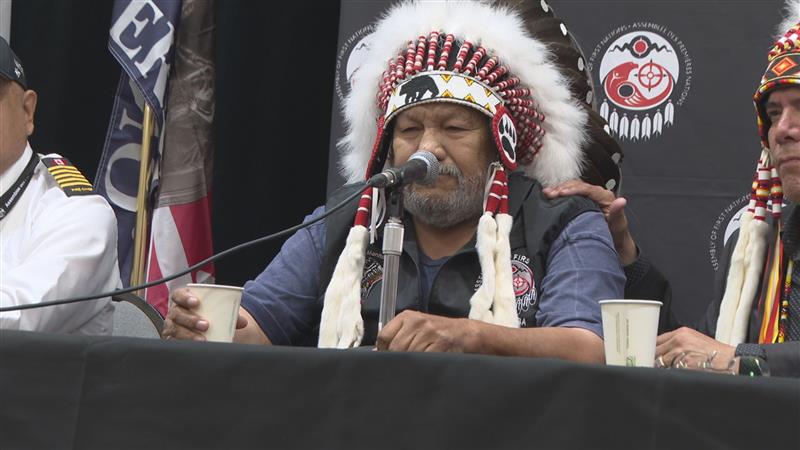
“We got to get home, we got to get home, our children are suffering,” said Chief Gordie Bear, of Mathias Colomb Cree Nation.
The evacuation began after wildfires and a major power outage forced the community to leave in May. Chief Gordie Bear said the community presented an $8-million backup generator plan, one he says Manitoba Hydro’s own consultants called the fastest way to restore power.
“All I asked for was $8 million to buy a generator to get my people home, and then they can take as long as they want to restore that power line,” said Chief Bear.
But Chief Bear says in a letter sent to the Nation, Ottawa refused to cover the cost, instead pointing to Manitoba Hydro as the responsible party.
He says the finger-pointing has left families stuck in limbo, with children starting school in hotels, elders far from home, and multiple members passing away since the evacuation began.
“It’s going to take us a full year to restore full, clean, healthy living,” he explained.
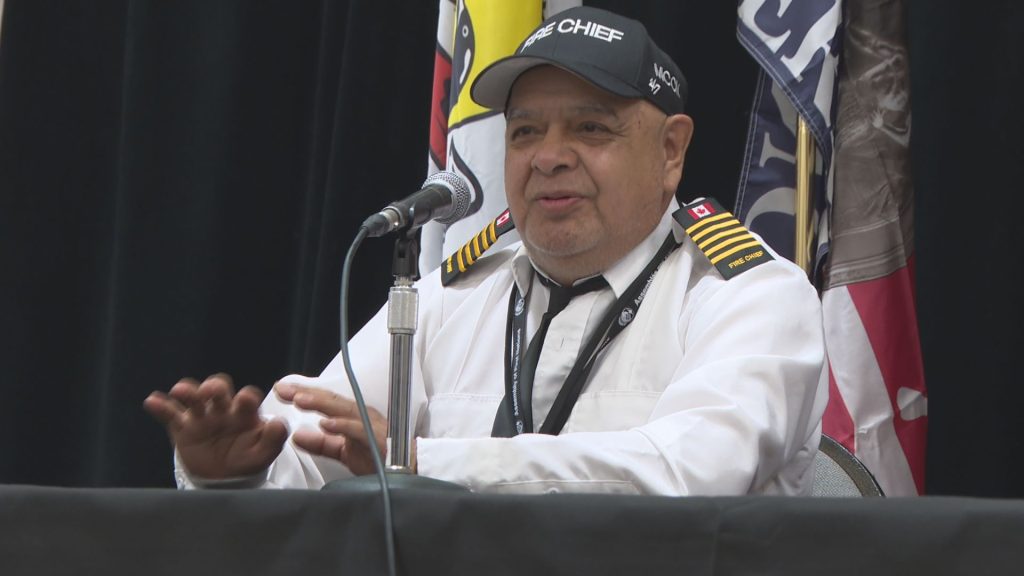
Fire Chief Glen Dumas, of Mathias Colomb Cree Nation, added, “If we do not have power in December, all the pipes are going to freeze in the Nation, 451 houses, the cost will be astronomical to repair.”
Assembly of Manitoba Chiefs Grand Chief Kyra Wilson says if all levels of government don’t commit to a solution by the end of the day, leadership is prepared to take matters into their own hands.
“If Canada and Manitoba, and Hydro do not respond to Chief Bear in what he is requesting, we will take the next steps. We’re done asking. We’re done knocking on the door,” said Grand Chief Wilson.
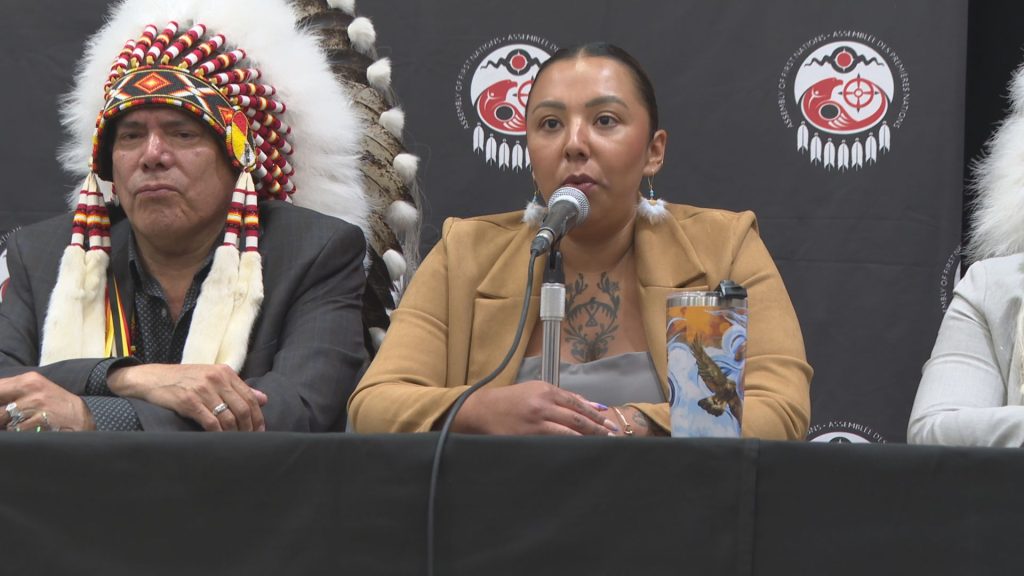
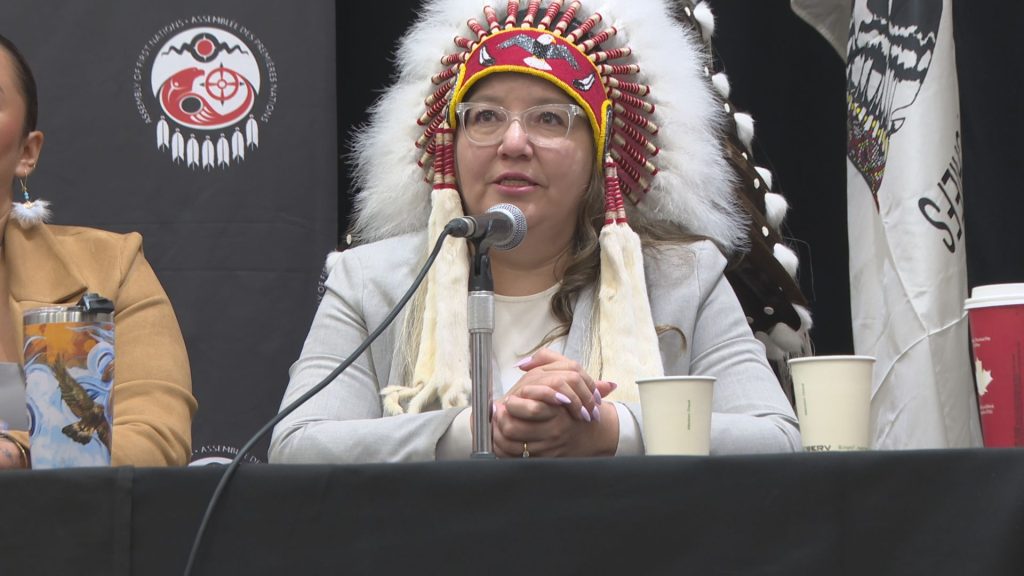
National Chief Cindy Woodhouse Nepinak, of the Assembly of First Nations, added, “Get your people to the table and create a tri-lateral table by the end of today so the Chief has this issue organized and done.”
Manitoba Hydro said in a statement that 253 wood pole structures were damaged or destroyed during the fires, with 155 currently replaced. They are hoping to have partial power restored by September 11th, with full restoration estimated by September 28.
Meanwhile, the Minister responsible for Manitoba Hydro, Adrien Sala, said they directed Hydro to hire a consultant to look at generator options, but says right now their focus remains on the power line.
“That’s a long-term conversation. Right now, the focus remains on getting power restored as quickly as we can,” said Sala.
CityNews reached out to Indigenous Services Canada on the matter, which responded by saying they understand the stress people are having from the wildfire season, but there are “shared responsibilities between federal and provincial governments and partners” that have to be worked through in order to allow people to return to their homes.
“Manitoba Hydro is responsible for restoring power to the entire community of Mathias Colomb First Nation. As the provider of electricity for all Manitobans, they are also responsible for evaluating the need and approving new and alternative energy sources for the whole community,” read a statement from Indigenous Services Canada.
“Indigenous Services Canada (ISC) officials continue to work with the Province of Manitoba to ensure that Manitoba Hydro advances the requests of Mathias Colomb Cree Nation. Enquiries related to the acceptance of the Nation’s proposal are best directed to Manitoba Hydro.”
They would go on to add that Minister Gull-Masty and Minister Sala spoke Friday, and it was noted that some progress was being made by Manitoba Hydro to restore power.
“We are engaging with First Nations and Manitoba to address these types of situations, particularly through the development of multilateral emergency management service agreements that include First Nations as full and equal partners in governance, planning, and delivery,” the statement continued.
Additional information on the Indigenous Services Canada’s Emergency Management Assistance Program can be seen by clicking here.